Vlad Maftei — VFX / 3D / AI
Polar Bear Walk
2026 — CREATURE ANIMATION / AI VIDEO MOCAP / FUR + LOOK DEVELOPMENT
A polar bear walk cycle captured from an AI video: a generated clip of my own model, fitted to a Blender rig and rebuilt as a clean looping walk, then groomed, lit on arctic snow and pushed to photoreal footage with LTX-2.5.
Tools: Claude Code (Opus 5.5), Tripo, Blender, Houdini, MiniMax H3, ComfyUI, PyTorch, Cycles, ChatGPT, LTX-2.5
Video: Polar Bear Walk, final shot (10 seconds)
Human + Claude
This polar bear was never animated by hand, and I never opened Blender to make it. The walk is motion capture from an AI video: a generated clip of my own model walking, turned into a clean, looping walk cycle on a real rig. Everything after that, the fur, the snow, the light and the final photoreal pass, was built on top of that walk.
My only interface was a conversation with Claude Code, running Anthropic's Opus 5.5. Claude wrote and ran every script in Blender, Houdini and ComfyUI on my workstation. My part was the one I know from years of VFX work: looking at every take and saying what was wrong with it.
The Idea
The idea is simple to say: render your own model from the side, let a video model make it walk, then copy that video back onto the skeleton. I wanted to do it with MiniMax H3 running locally in ComfyUI, on a Tripo polar bear, and push it far past game quality.
A Mesh That Can Walk
The Tripo model looked good and was useless for rigging. The head was turned off-axis, left and right did not match, and the hind paws floated 3.5 cm above the ground. Claude straightened the neck along its measured midline, made the body symmetric, rebuilt the surface in Houdini as 16,000 clean quads, made new UVs and transferred the original texture across.

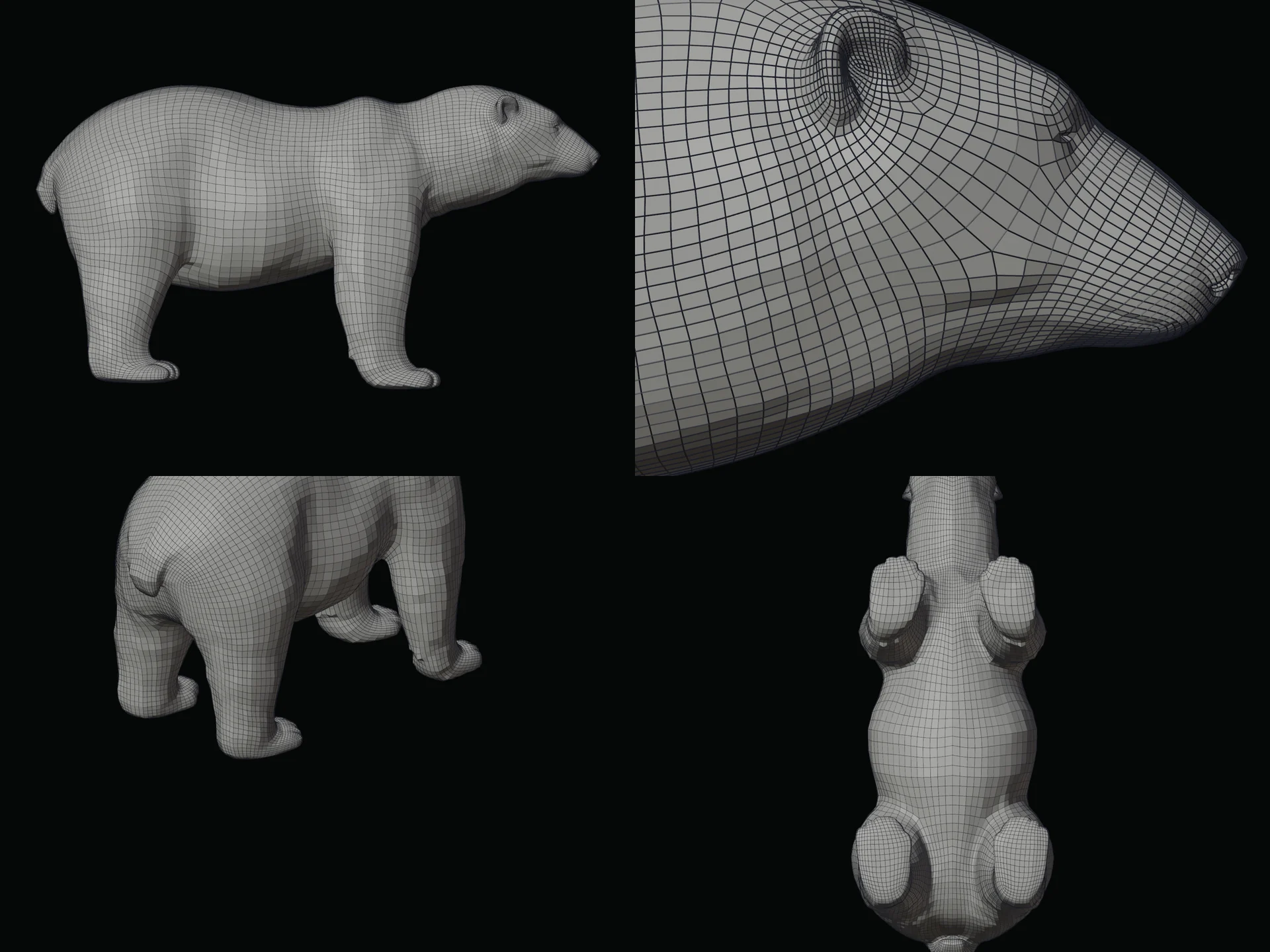
The rig is built from code as well: IK paws that live in world space so a planted paw can never slide, toes that bend at the right joint, separate claws, and corrective smoothing on the joints. When I spotted the paws creasing, the skinning was redone and the hind paws learned to curl like the front ones.
Video: Rig deformation test: walk extremes on the left legs
Video: Paw skinning before and after, half speed
The Reference
A video model needs a picture it cannot misread. The bear was rendered in its rest pose from the side and from the front at once, on chroma green, with the left lower legs painted pink and the right ones blue so the legs can be told apart later.
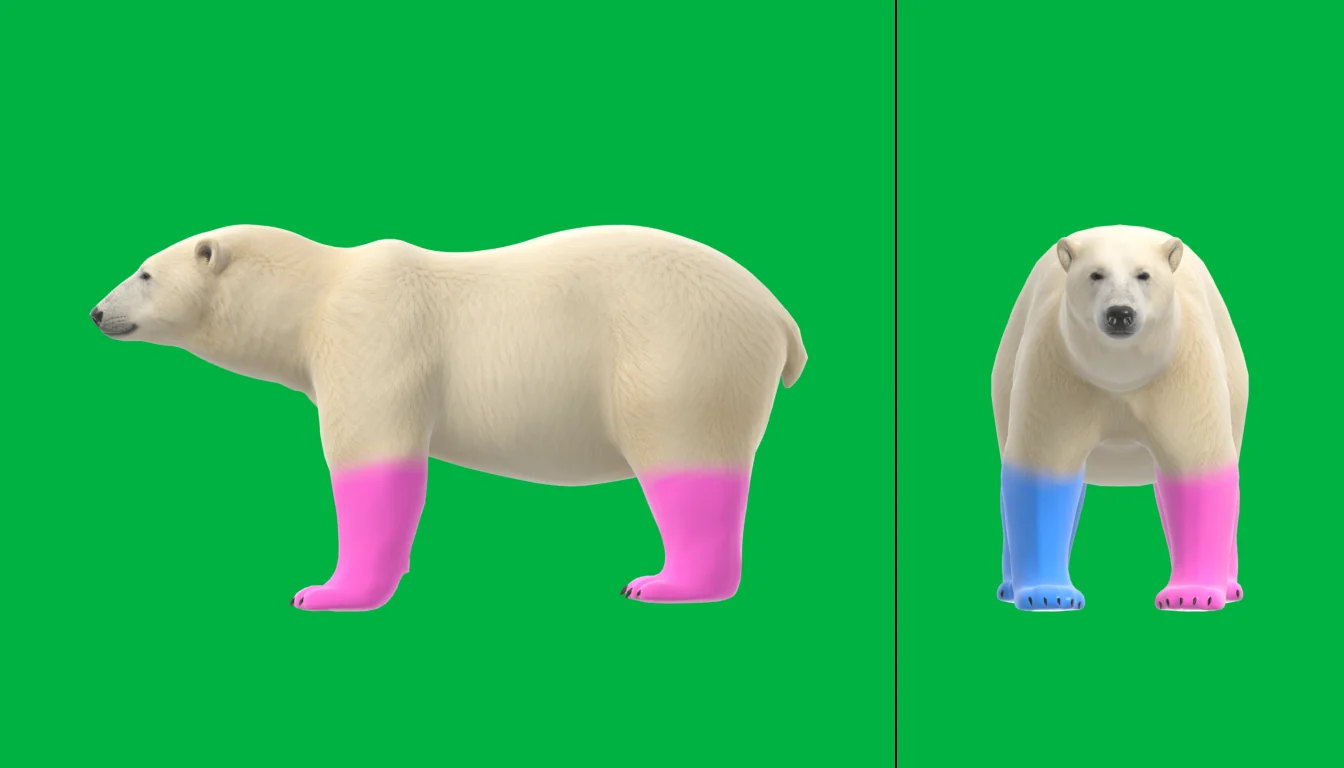
MiniMax H3 turned that single frame into 192 frames of the bear walking on the spot. It is a treadmill walk: the body stays in place while the planted paws slide back at walking speed. One clip holds about two and a half usable cycles of 58 frames each, and the motion has what I wanted: weight, shoulders and hips that work, and paws that drag and flick.
Video: The MiniMax H3 reference: 192 generated frames, side and front
From Video To Bones
This is where most of the first day went, and most of it went wrong. Fitting the rig to the video frame by frame gave jitter and broken poses. Tracing paw paths into a procedural walk was smooth and dead. A hand-keyed walk was snappy and had no weight. Copying the fitted rotations straight onto the rig popped the knees on every step. I rejected all of them, loudly.
What finally worked has two halves. First, fit one periodic cycle to all the video cycles at once. Every bone gets a smooth repeating curve, a small differentiable renderer draws the rig into both views, and an optimiser moves the curves until the silhouette and the pink and blue legs sit on the video. Because it is one cycle averaged over the whole clip, the noise cancels and the result loops by construction. It takes about five minutes on one GPU and lands at 94% silhouette overlap from the side and 95% from the front.
Second, rebuild the walk from that fit instead of transferring it. The body keeps the fitted motion, symmetrised and smoothed, with the head held level. The legs are built fresh, using the fit as a guide: exact planted contacts, a heel-first strike, a continuous swing between them, and overlapping action on the paws and toes so they trail the leg and flick through.
Video: Paws against the reference, half speed
Directing The Walk
A walk that passes its checks is not yet a good walk. It took 14 rebuilds, each answering one note. The hind paws had to roll like the front ones. A strange slowdown appeared whenever a front paw landed; fixing it lost the feeling of weight; fixing that flattened the shoulders and made the head bob. The version I approved lets the shoulder blades turn about their middle, with the chest hanging between them, which is how a bear carries its weight.
Video: Shoulders and head against the reference, half speed
Every build was checked on a ground plane before I saw it: nothing below the ground, no joint pops, no jitter, knees never locked, the head steady.
Video: The approved walk, three-quarter view on a ground plane
Video: The approved walk from a low paw camera
Seventy-Six Versions Of Fur
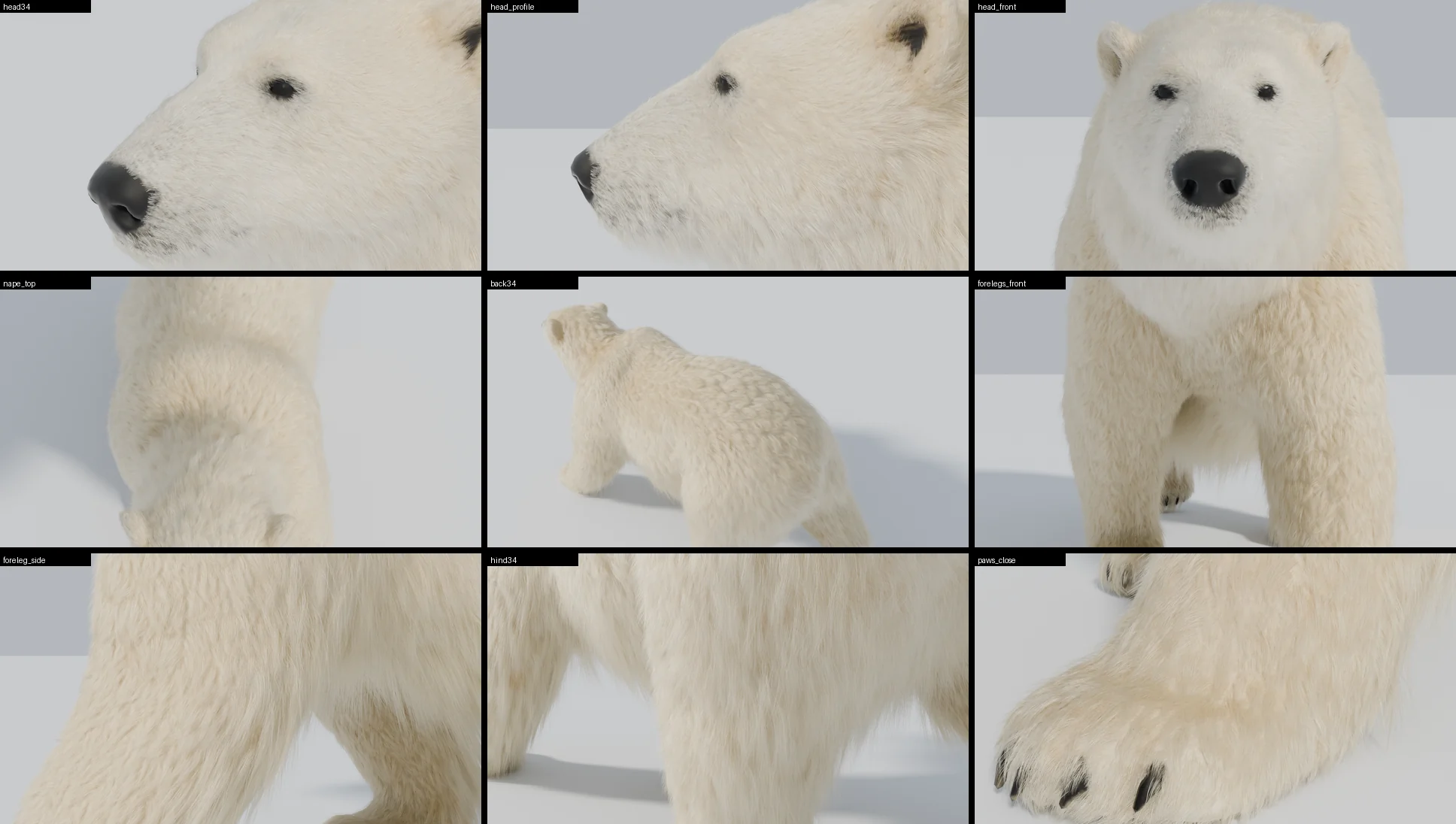
The fur is Blender hair curves built with geometry nodes and rendered in Cycles. It started badly: a real-time attempt, then a bear that looked bald, then one that looked puffy, as if it had come straight from the dry cleaner. The fix was to stop guessing and study photographs of real polar bears region by region: hair length, how strongly it clumps, how far it lifts off the skin, where it hangs.
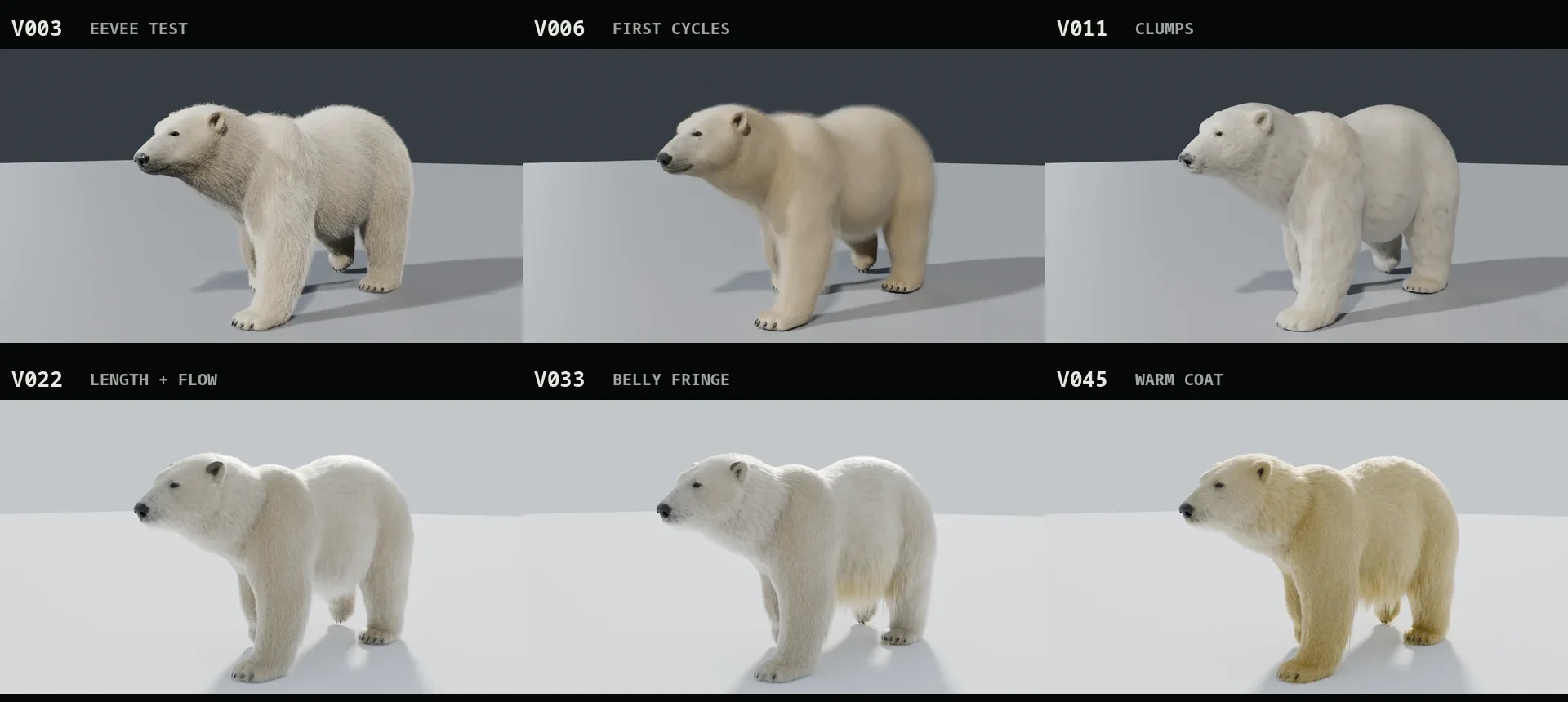
Those measurements became maps painted over the body that drive the groom.
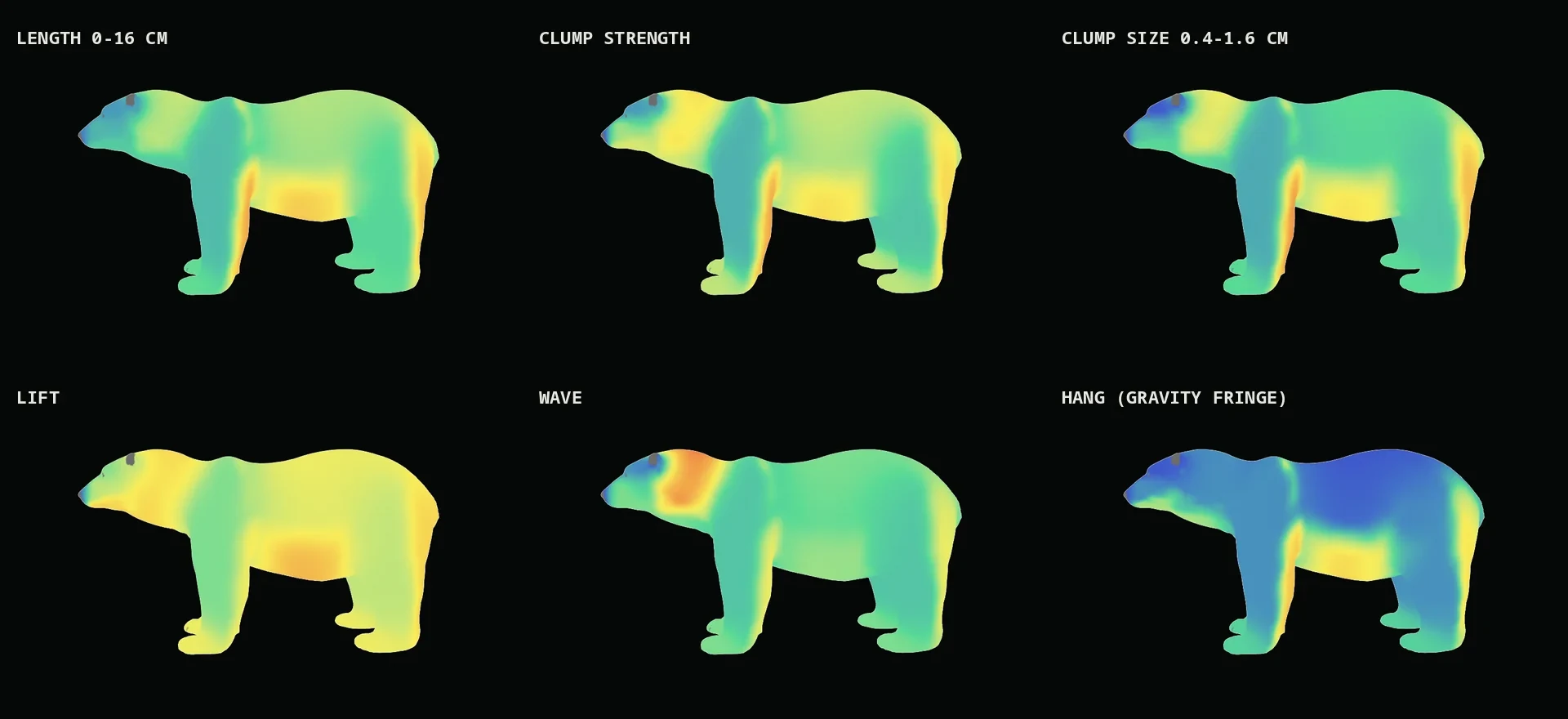
The direction of the hair got its own study, section by section, after I pointed out the flow had been mapped wrong. Later rounds added the stray hairs that break up the outline of the legs and back, the wet yellowish fringe under the belly, toe tufts around the claws, and a nose pad that reads as skin instead of plastic.
Golden Hour On The Ice
For the shot I gave Claude one photograph of a polar bear in low golden light and asked for that. The camera was matched to it, and the sun direction was solved from the lit and shadowed sides of the bear: low from the left, two degrees above the horizon. The first attempt had it mirrored, and I caught it.
The snow took the longest, more than 300 look-development renders. Sculpted terrain kept reading as a flat plain or as lumps. What worked was building it in the material: layered noises for wind-packed drifts, mixed with scanned snow textures, with fine crust added only in patches. Each round was measured against the photograph, down to how much of the frame sits in blue shadow.
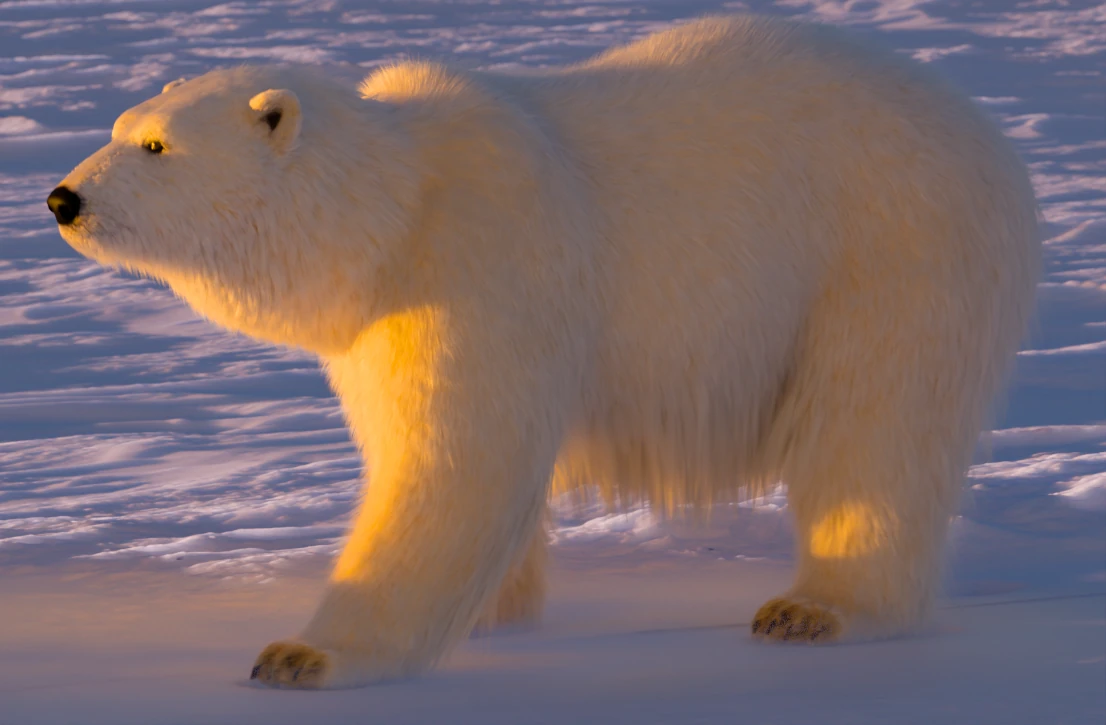
Video: The Cycles render: follow camera with a subtle handheld move, film grain
From CG To Footage
The last step uses the CG shot as a blueprint for a video model. ChatGPT repainted the first CG frame as a photoreal frame, keeping the bear, the light and the drifts where they were. Then LTX-2.5 with a Layout-to-Render control LoRA generated the clip: the CG video drives the camera and the bear's motion, and the photoreal frame sets the look. Drag across the same frame below, from the Cycles render to the repainted frame to the generated footage.
All 241 frames come out in a single pass in about six minutes. The camera move, the handheld wobble and the walk stay locked to the CG, while the model redraws the fur and snow.
Video: The CG layout beside the LTX-2.5 result
What I Learned
An AI video is a good source of motion and a bad source of animation. The clip had the weight and the life, but it only became usable once it was rebuilt with the rules an animator would apply: clean contacts, heel-first steps, overlap, a steady head. The numbers caught the pops and the sliding; they never caught a walk that simply felt wrong. That part stayed with me.
Claude turned the whole process into a written manual and a reusable skill afterwards, so the next creature starts from the pipeline that worked.