Vlad Maftei — VFX / 3D / AI
Night of the Living Dead - LTX-2 Contest
2026 — AI VIDEO / EDIT / WORKFLOW
For an LTX-2 contest, I rebuilt a complete sequence from Night of the Living Dead as generated footage while keeping the supplied soundtrack and editorial duration fixed so the result could drop back into the film.
Tools: ComfyUI, LTX-2, Qwen Image Edit, DWPose, Blender
The Constraint
The contest started with one sequence from the 1968 film `Night of the Living Dead`. I could redesign every image, but the supplied audio and the 108.885-second editorial duration had to remain the spine of the piece. The generated shots therefore had to land on the existing performances, cuts, pauses, and sound cues closely enough for the replacement sequence to fit back into the full movie.
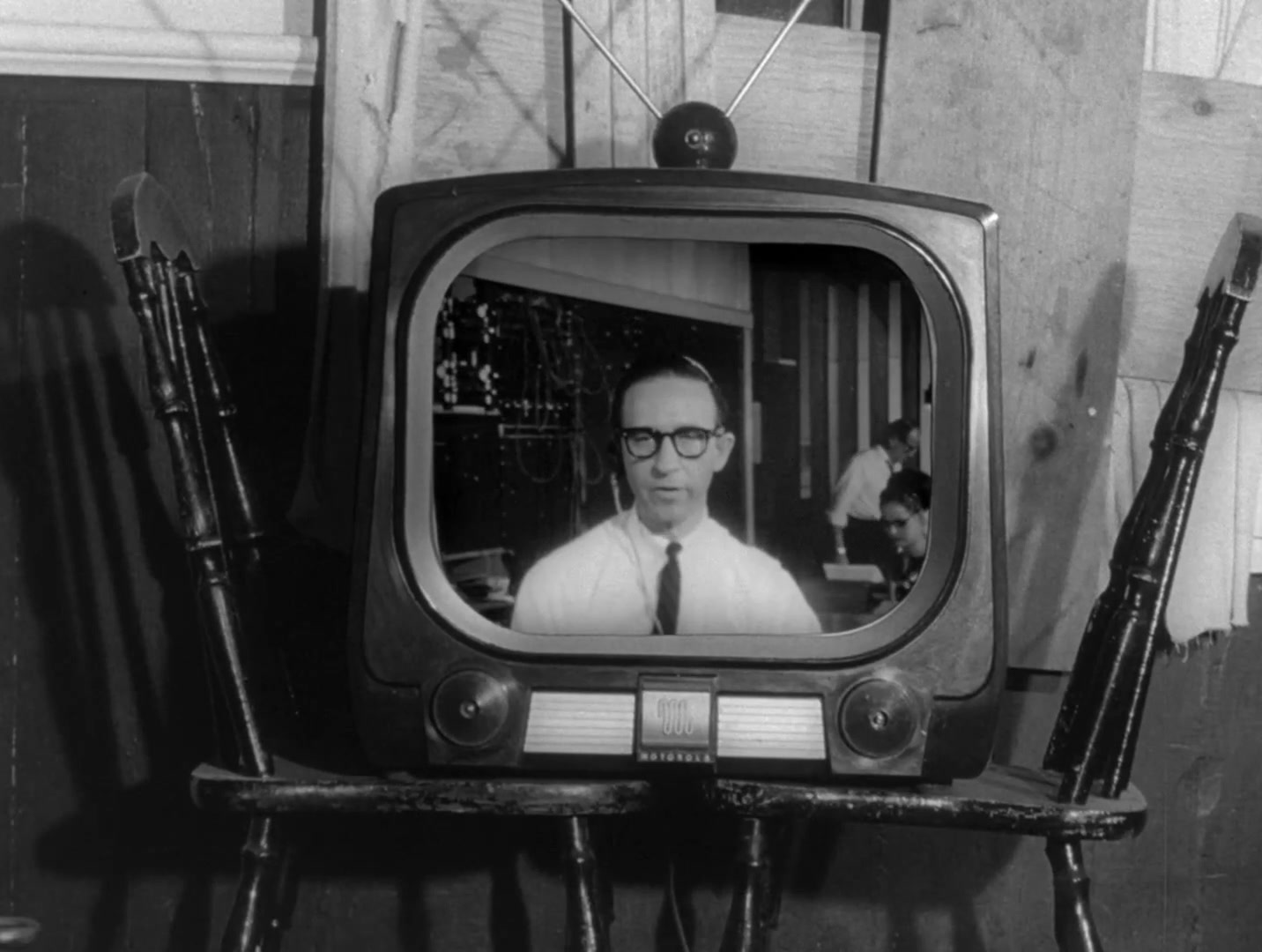
I split the scene into a shot-by-shot package and carried the original timing through the whole workflow. The archive eventually grew into 22 working shot folders, each holding experiments, structural passes, restyles, composites, motion generations, and selects. That organization mattered because this was not one hero shot; it was a continuous edit that had to survive from first frame to last.
Structure Before Style
Before asking an image model for a new world, I extracted controls from the source. HED edges held onto silhouettes and important object boundaries, while depth passes gave the restyle and motion stages a stronger understanding of foreground, background, and spatial separation.
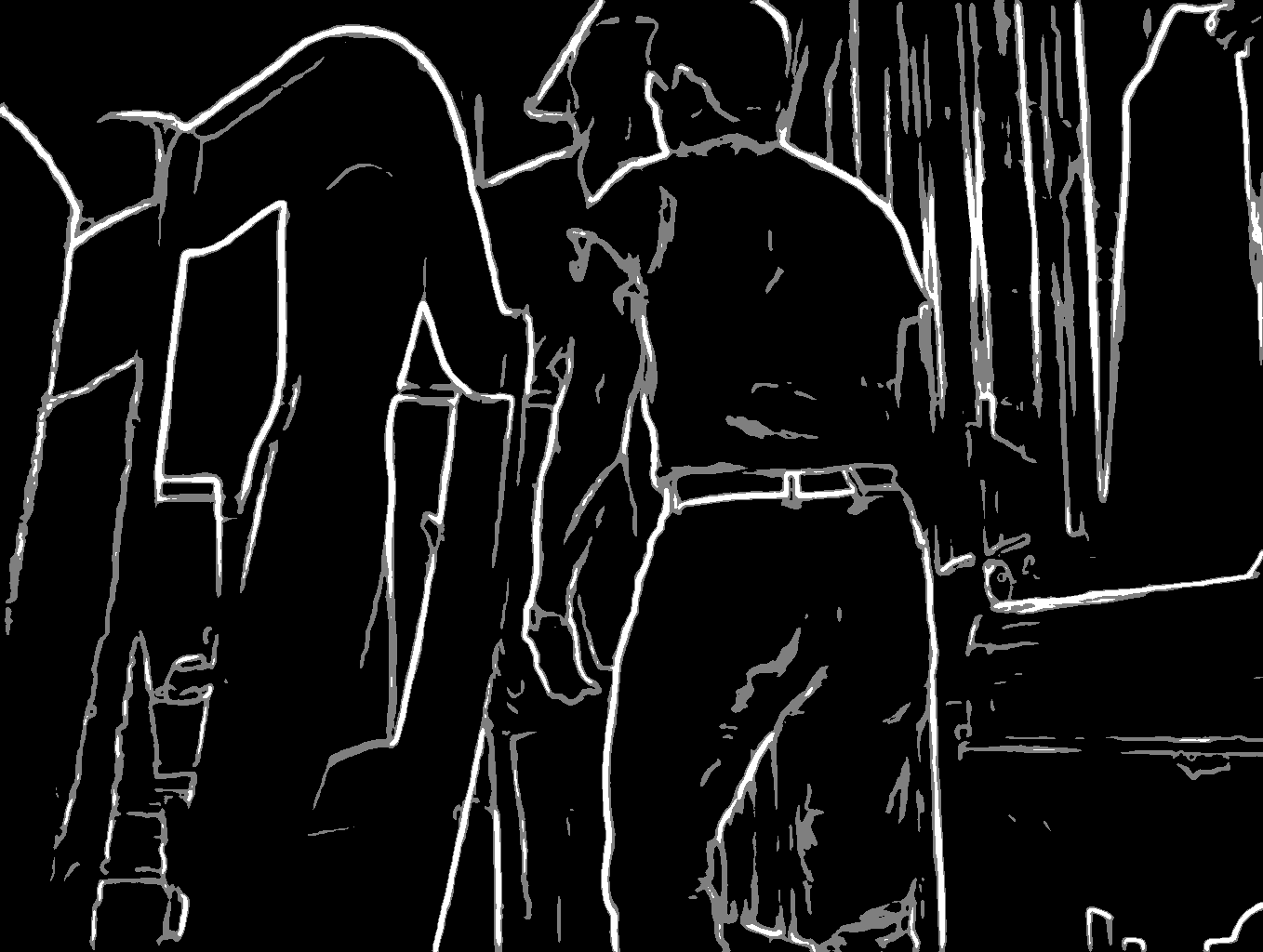
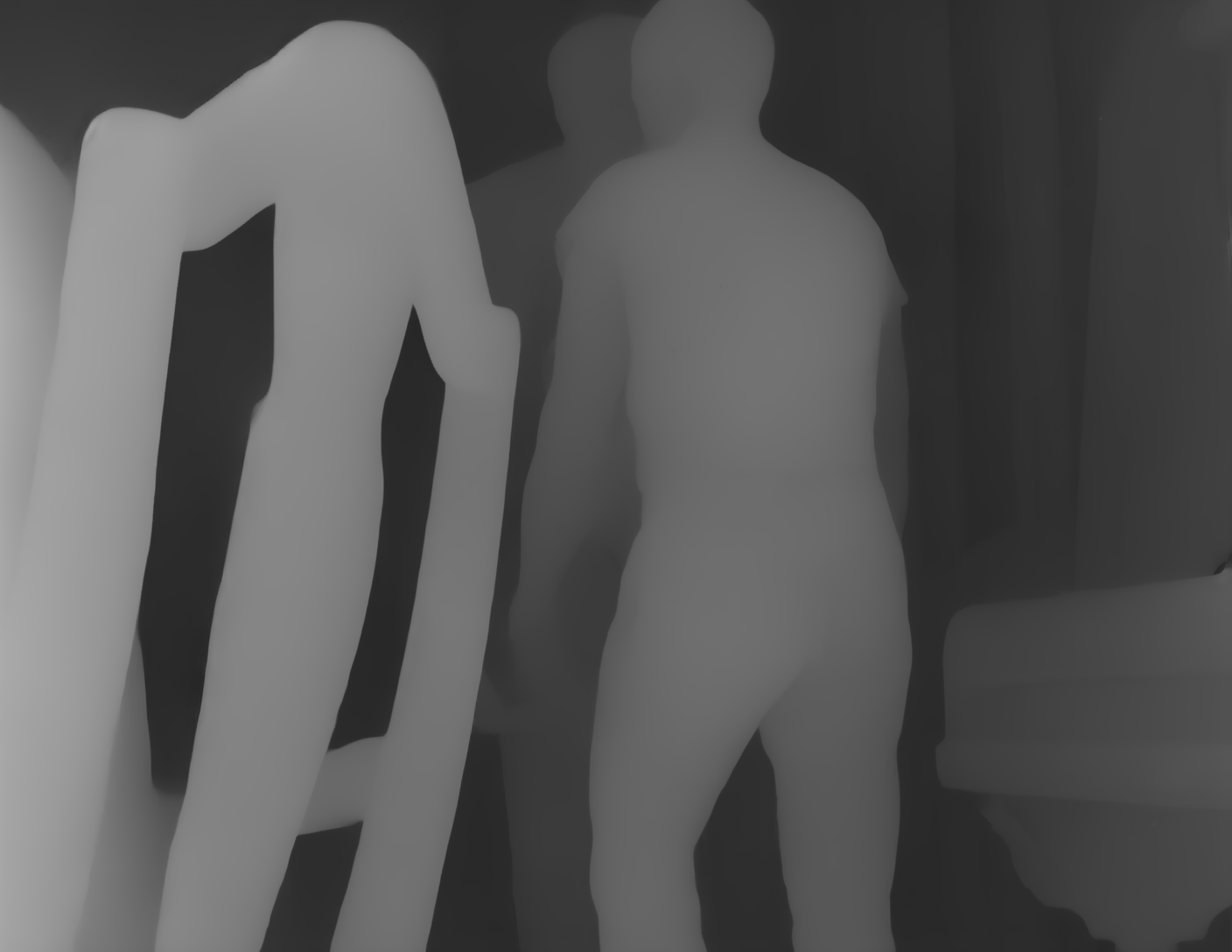
These guides were not treated as finished images. They were constraints: enough structure to preserve the shot, but enough freedom for the generated sequence to become a different visual world.
Qwen Look Development
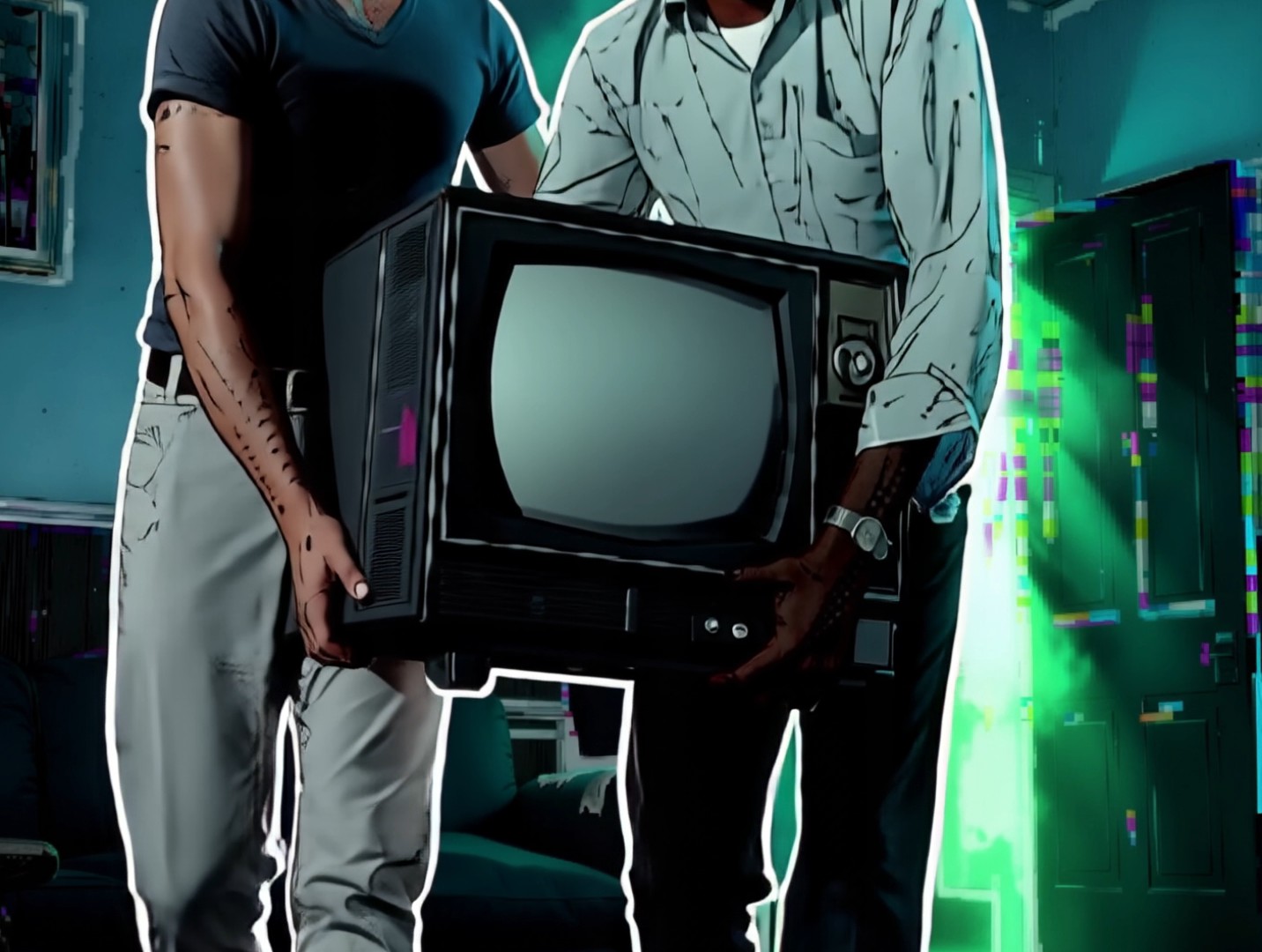
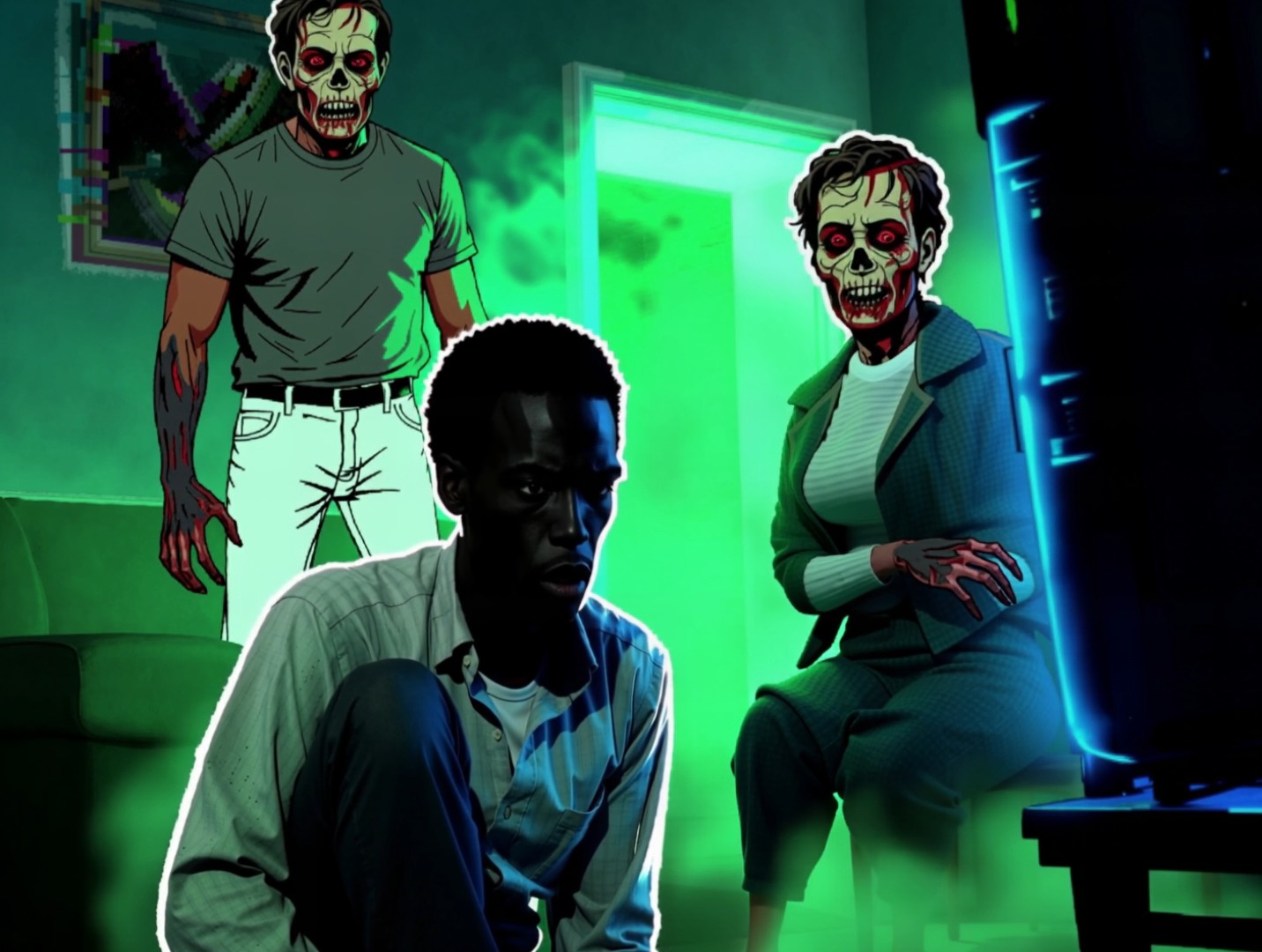
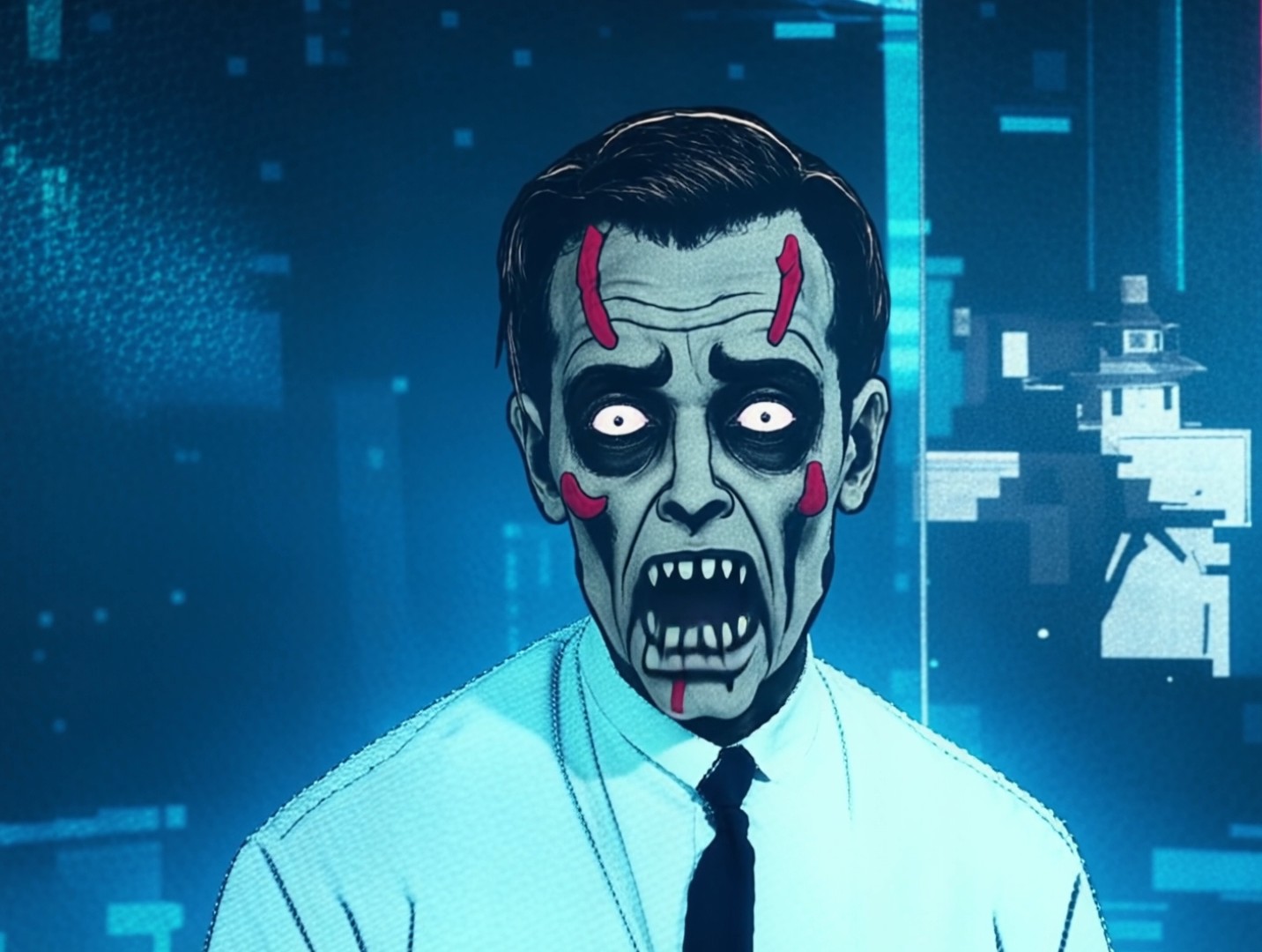
I used Qwen Image Edit inside ComfyUI for the main restyle stage. Multi-reference conditioning let me push a consistent graphic direction across different source shots, while prompt iterations and a Lightning LoRA made it practical to test variations quickly. I was looking for a sickly green and cyan broadcast-horror language built around CRT screens, hard comic shading, and exaggerated characters.
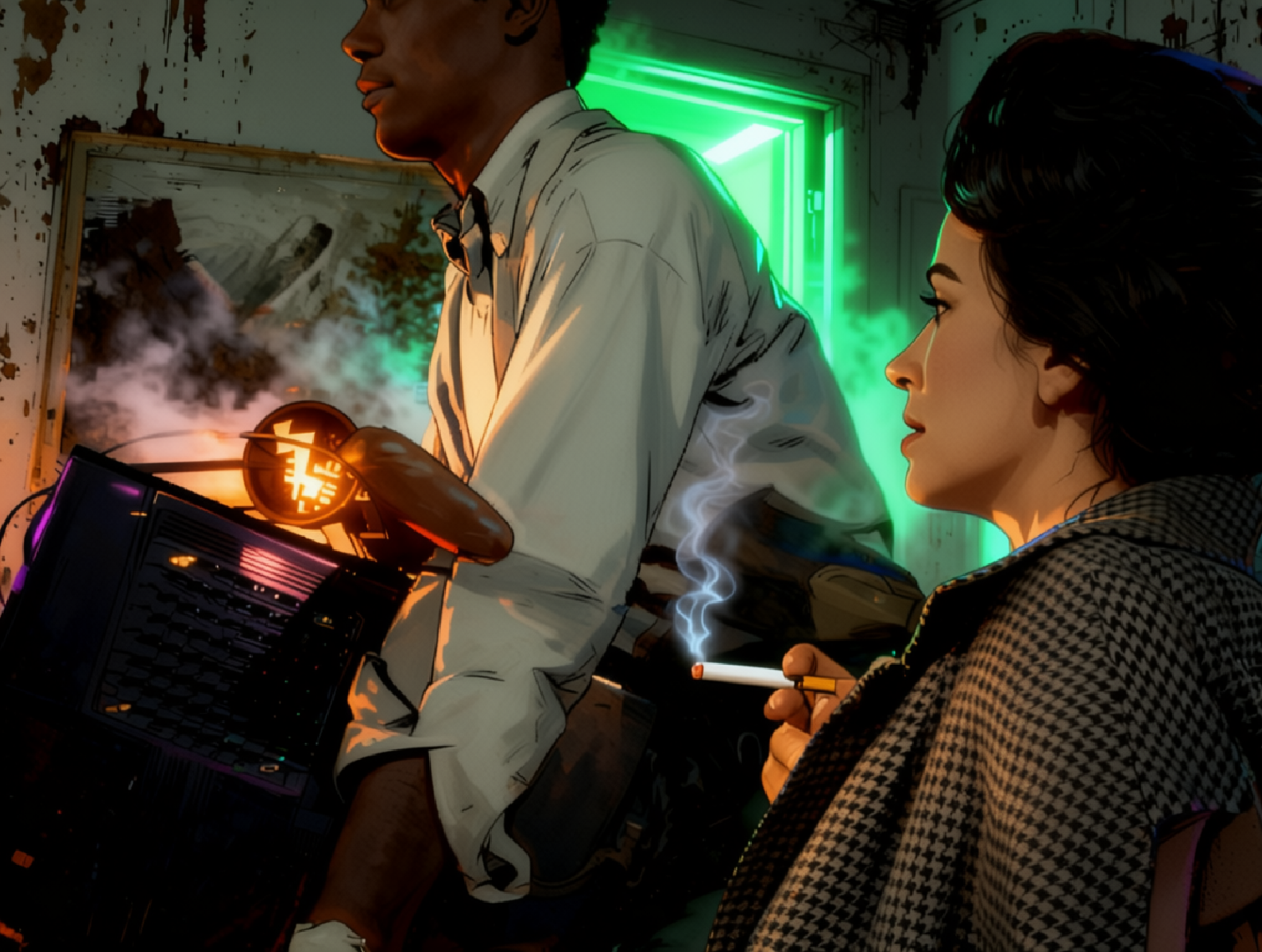
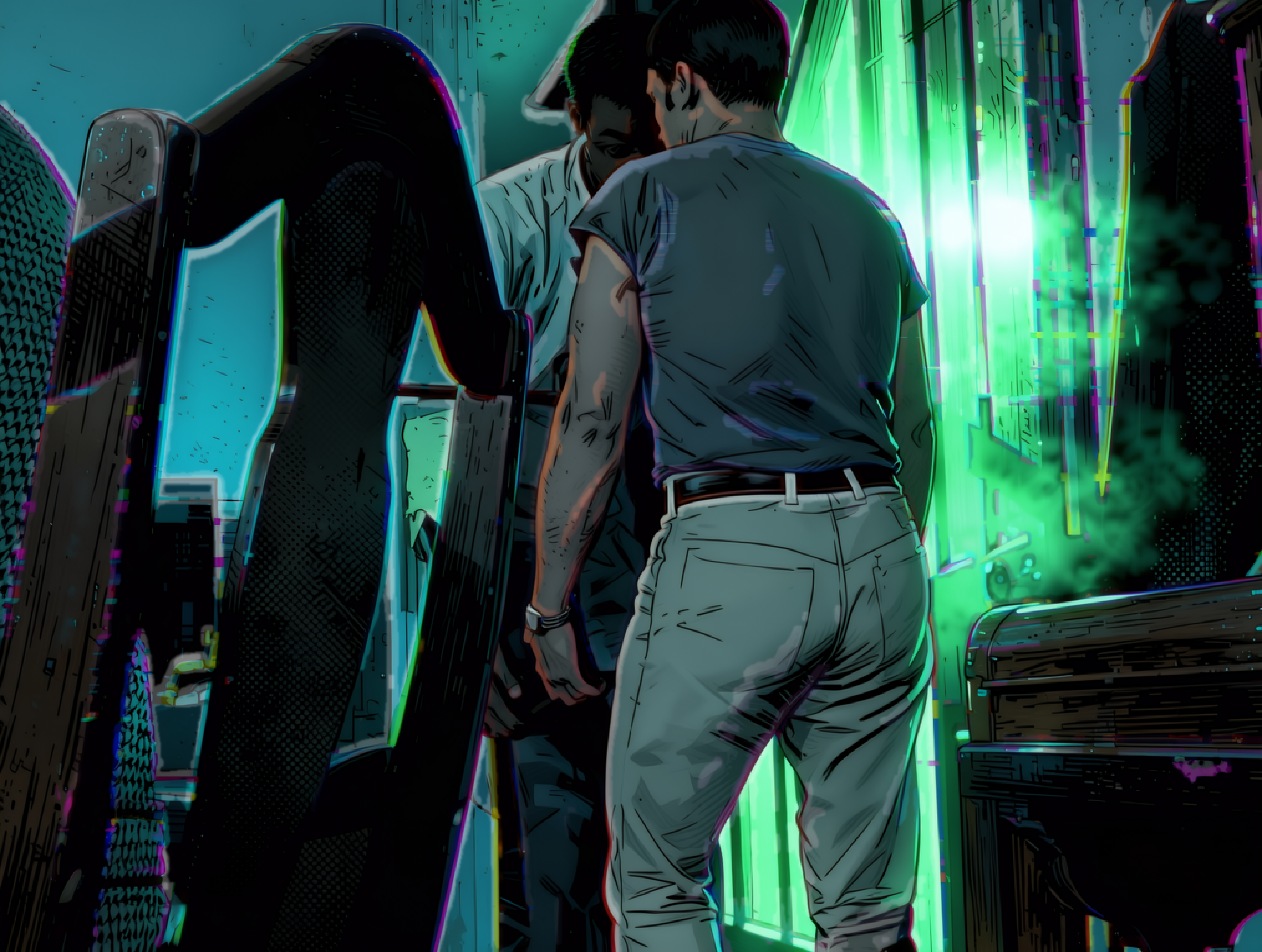
The restyle alone was rarely enough. I combined and upscaled selected elements so faces, screens, props, and silhouettes were stable before motion generation. That gave LTX-2 a cleaner starting image and reduced the amount of repair needed after each pass.
From Still To Motion
For motion I worked with LTX-2 19B through several controlled paths rather than relying on a single image-to-video prompt. Pose, canny, depth, image conditioning, and audio conditioning could be mixed according to what a shot needed. Short tests helped me diagnose motion before committing to longer generations.
Video: LTX-2 pose-guided motion test
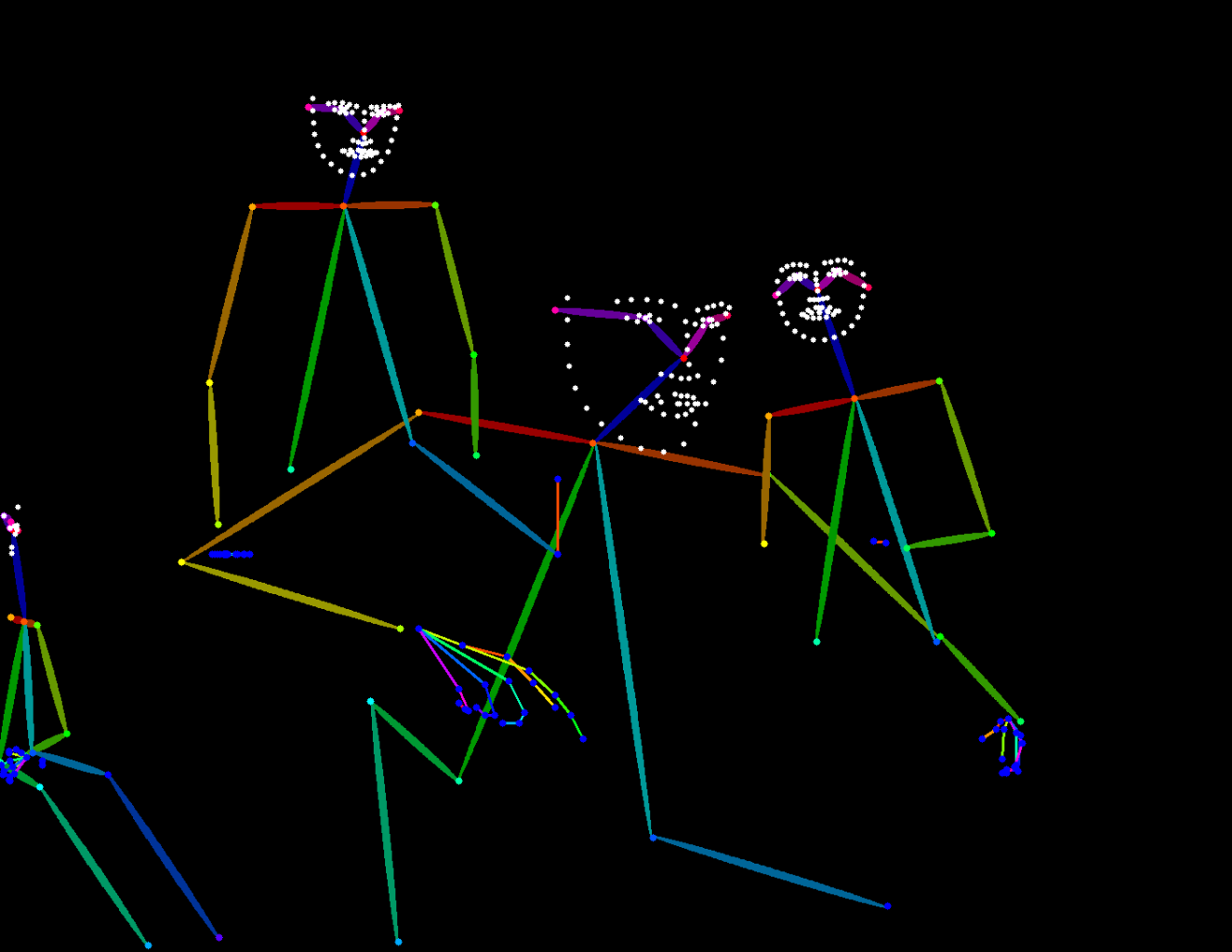
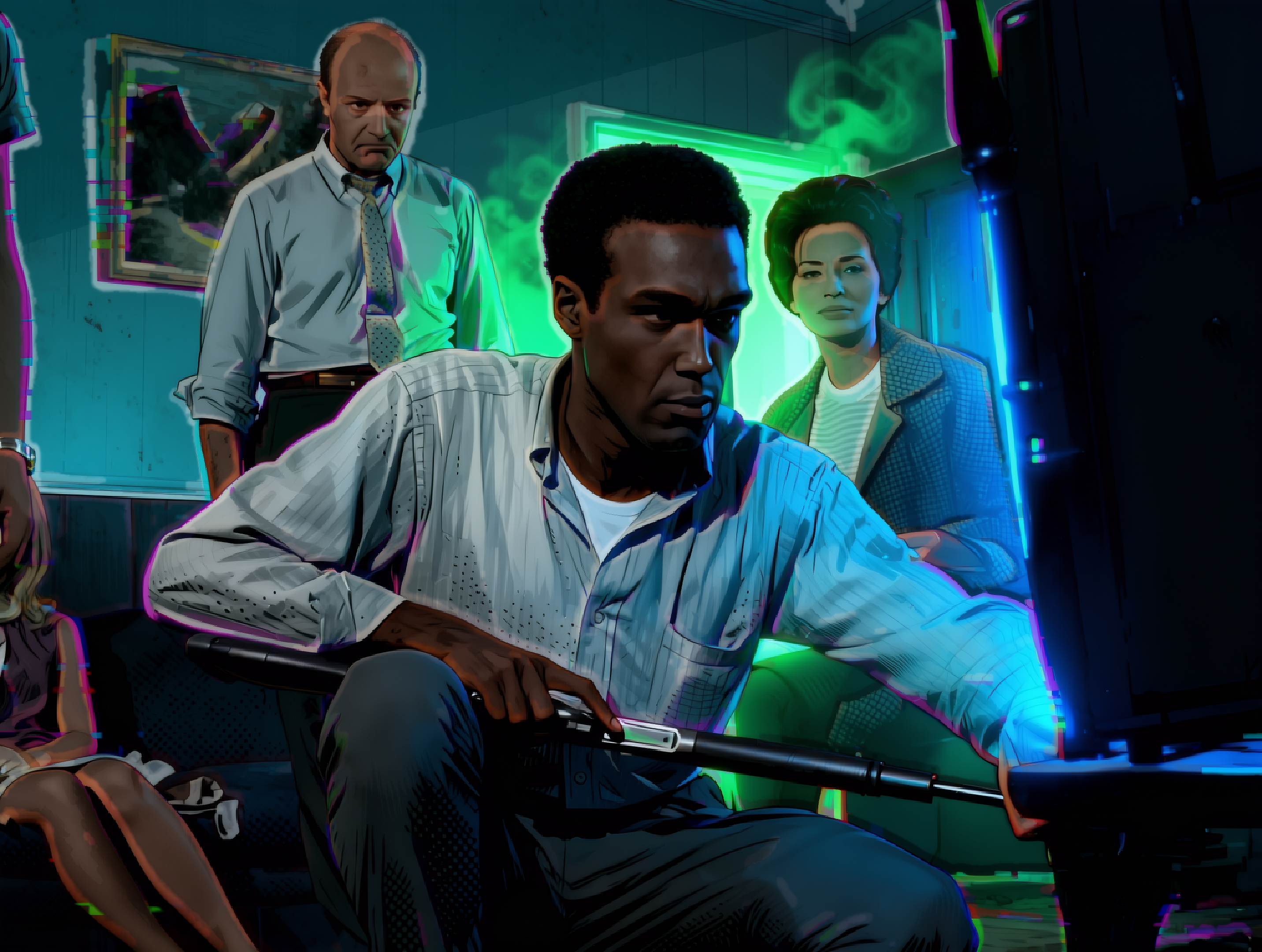
DWPose was especially useful when the source performance had readable body language that needed to survive the redesign. For crowded shots I assembled a more stable multi-character image first, then used that composite as the motion source.
Audio-Guided Takes
The original soundtrack was more than a delivery requirement: it also became a conditioning signal. Audio-guided LTX-2 passes helped movement and performance energy respond to the existing dialogue and rhythm while I kept the source edit locked.
Video: Selected audio-guided shot experiment
The multi-character shots needed more iteration because consistency, eyelines, action, and screen direction all had to work at once. This selected WIP shows the point where the generated motion began to behave like part of a sequence rather than an isolated AI clip.
Video: Multi-character audio-guided LTX-2 take
ComfyUI Graph
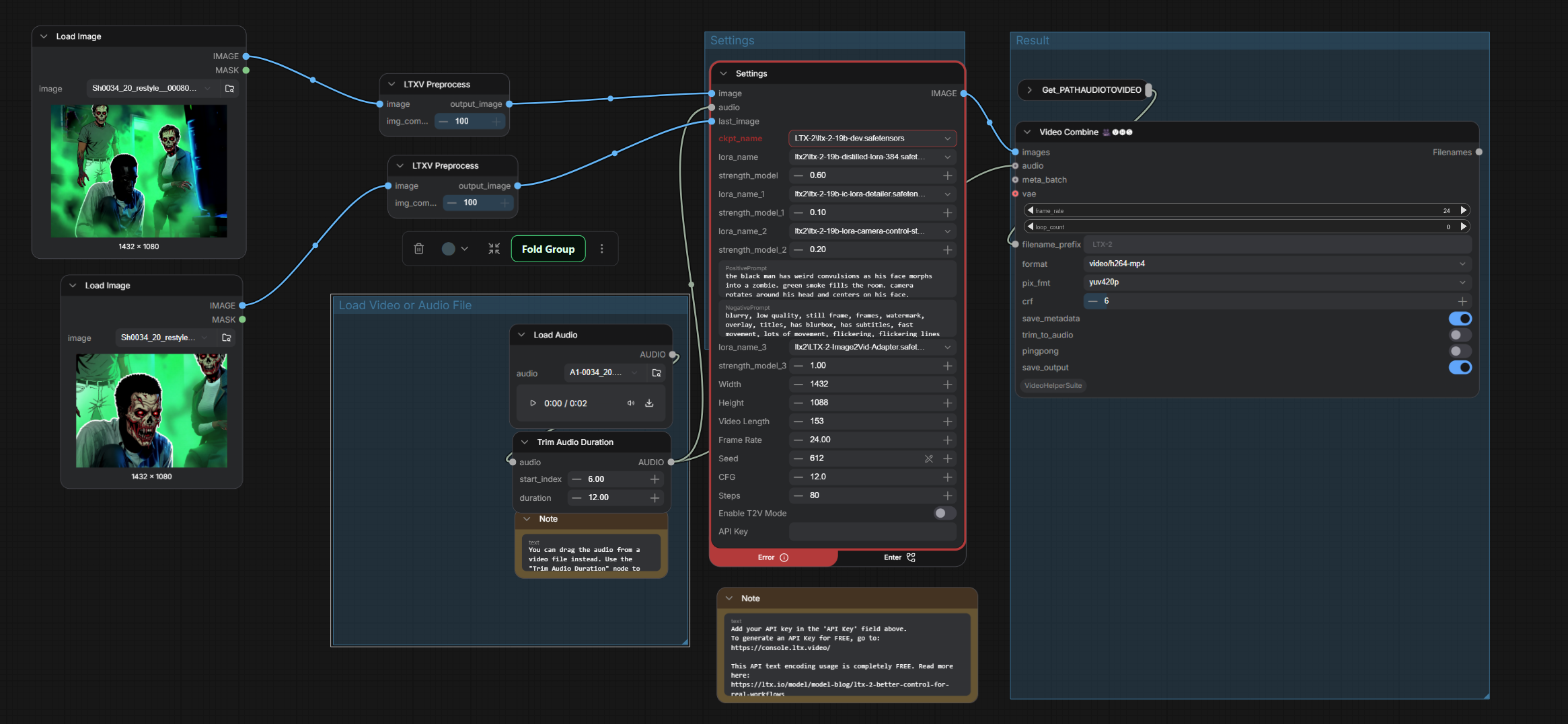
This is the compact LTXV setup I used for one of the selected shots. Two prepared image states are preprocessed and supplied as first/last-frame controls, while a trimmed section of the source audio drives the generation. The central settings group keeps the LTX-2 checkpoint, distilled/detail/camera-control LoRAs, prompt, 1432 x 1088 output size, 153-frame length, 24 fps, seed, CFG, and steps visible in one place before Video Combine writes the result.
Camera And Shot Design
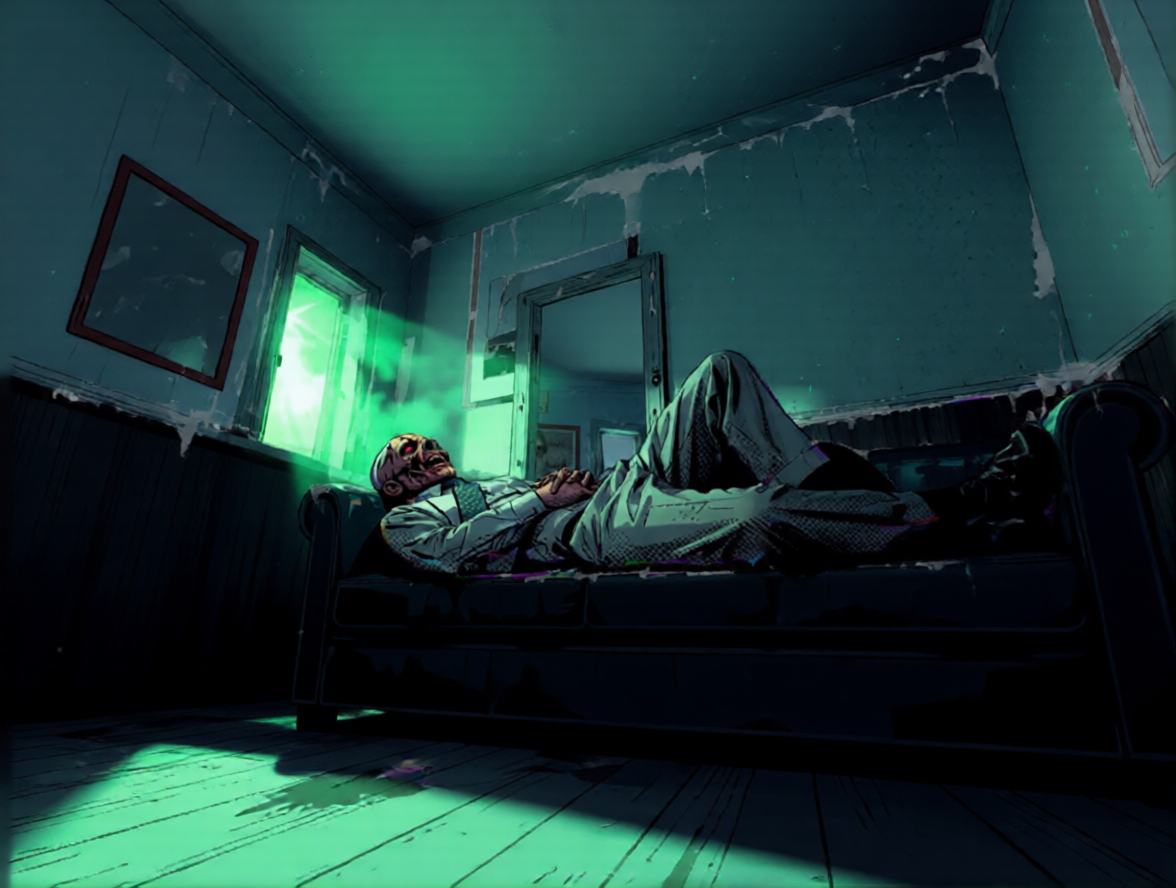
I also tested camera reinterpretations instead of tracing every source frame literally. Close, wide, side, aerial, and low-angle prompts let me look for a more authored shot while still respecting the editorial function of the original beat.
Editorial Reintegration
The final stage was selection and repair: choose the strongest generations, reject motion that broke continuity, check cut points against the fixed soundtrack, and assemble the sequence at 24 fps in Blender. I preserved the canonical final export's audio stream in the web version above.
What I Learned
Long-form generated video is mainly a continuity problem. A beautiful single shot is easy to admire and easy to replace; a sequence has to preserve timing, character identity, eyelines, screen direction, action, and the intention of every cut. The strongest workflow was not one model or one prompt. It was a controlled loop between source analysis, restyle, motion tests, repair, and editorial judgment.