Vlad Maftei — VFX / 3D / AI
F1R - Fugi Visualizer
2026 — AI MUSIC PROJECT / CODEX / ASCII VISUALIZER
F1R is my AI-based music and character art project. This page focuses on the Fugi lyric visualizer I built with Codex: a live browser transmission with an animated ASCII face, audio-reactive motion, synced lyric glitches, and F1R character explorations.
Tools: Codex, Suno, HTML Canvas, Web Audio API, JavaScript
Project Signal
F1R is the band/project name for an AI-based music and visual identity experiment. `Fugi` is one track inside that world, and the lyric visualizer is only one output from a larger character-driven art direction: music generation, cyberpunk portrait experiments, browser animation, and a fictional hacked transmission language.
The live version is here: open the Fugi visualizer.
What I Made With Codex
I used Codex as a build partner to turn the Suno track into a browser-native lyric video. The page is not a rendered video file: it draws the performance live with HTML Canvas, a source portrait, timed lyric cues, procedural glitch cards, and audio-driven motion.
The important part is the workflow. I could describe an idea in motion-design language, inspect what the browser was doing, push the code toward a stronger image, and keep iterating until the piece felt less like a tech demo and more like a tiny F1R transmission.
Reference To ASCII
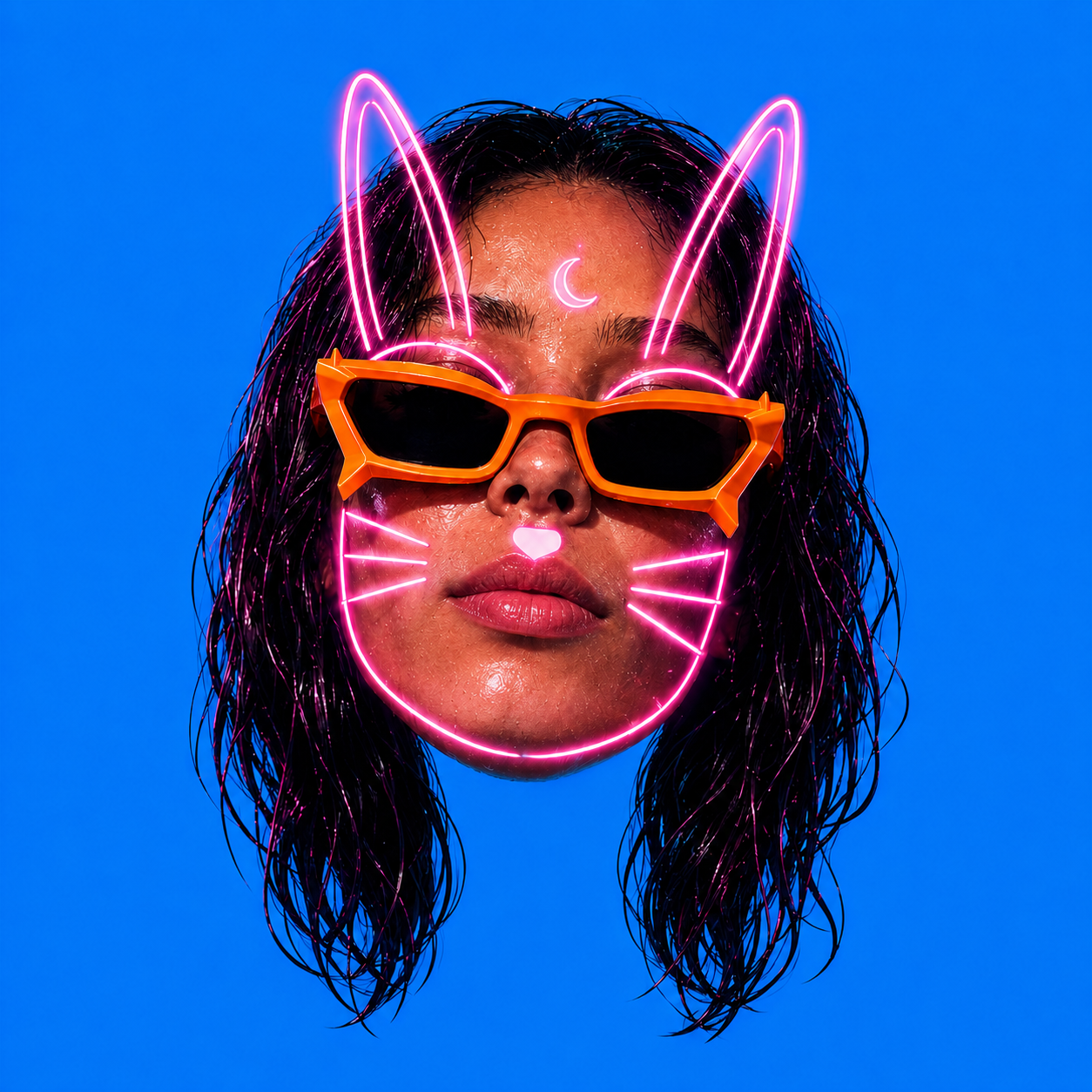
The visualizer converts this portrait into an ASCII signal. The browser crops the head, rejects most of the flat blue background, samples color and brightness into character cells, then gives the face a fake depth model so it can yaw, push, trail, and tear with the song.
Effect Stack
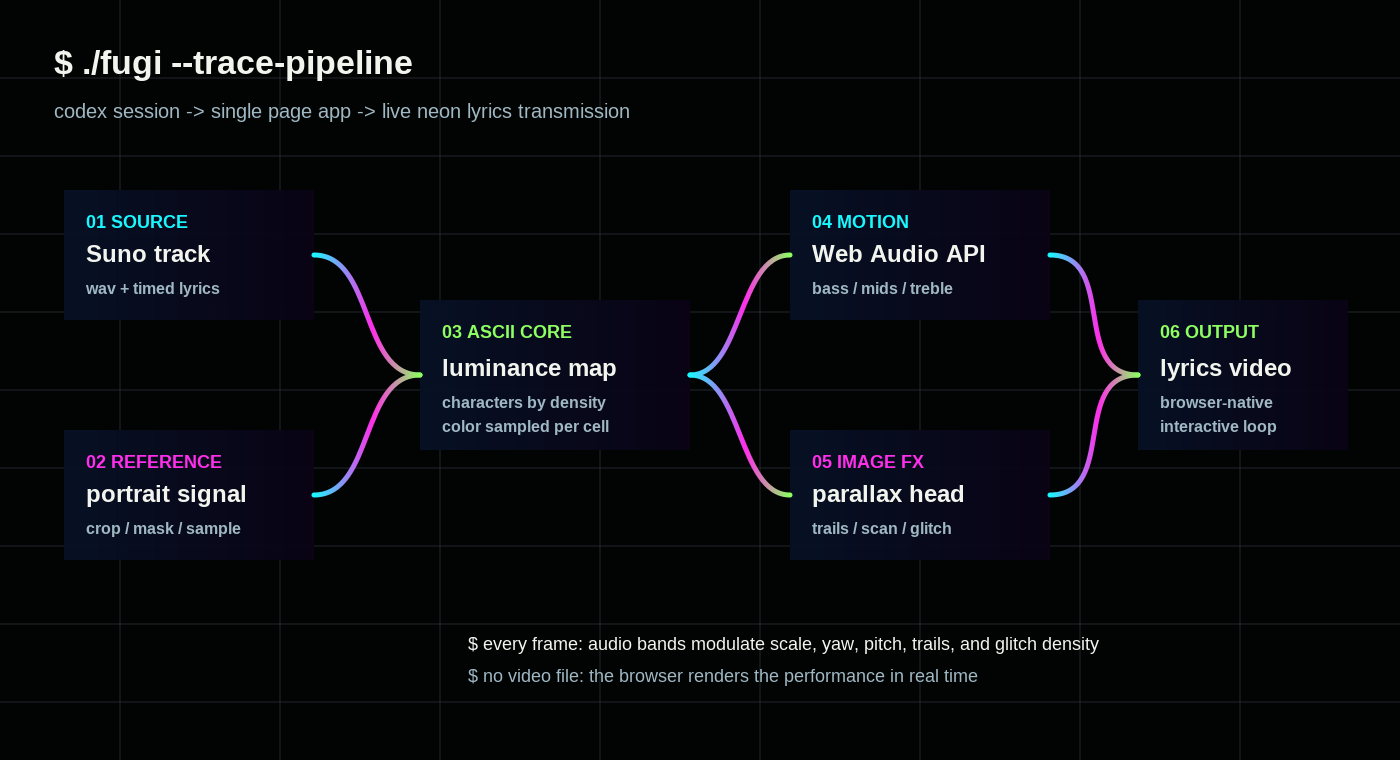
The signal chain is intentionally direct: song plus portrait go in; the browser generates the ASCII face, motion, trails, scanlines, HUD noise, and lyric bursts in real time. Codex helped iterate the canvas architecture, timing data, and visual system quickly enough that the tool started feeling more like a live instrument than a static page.
ASCII Face Layers
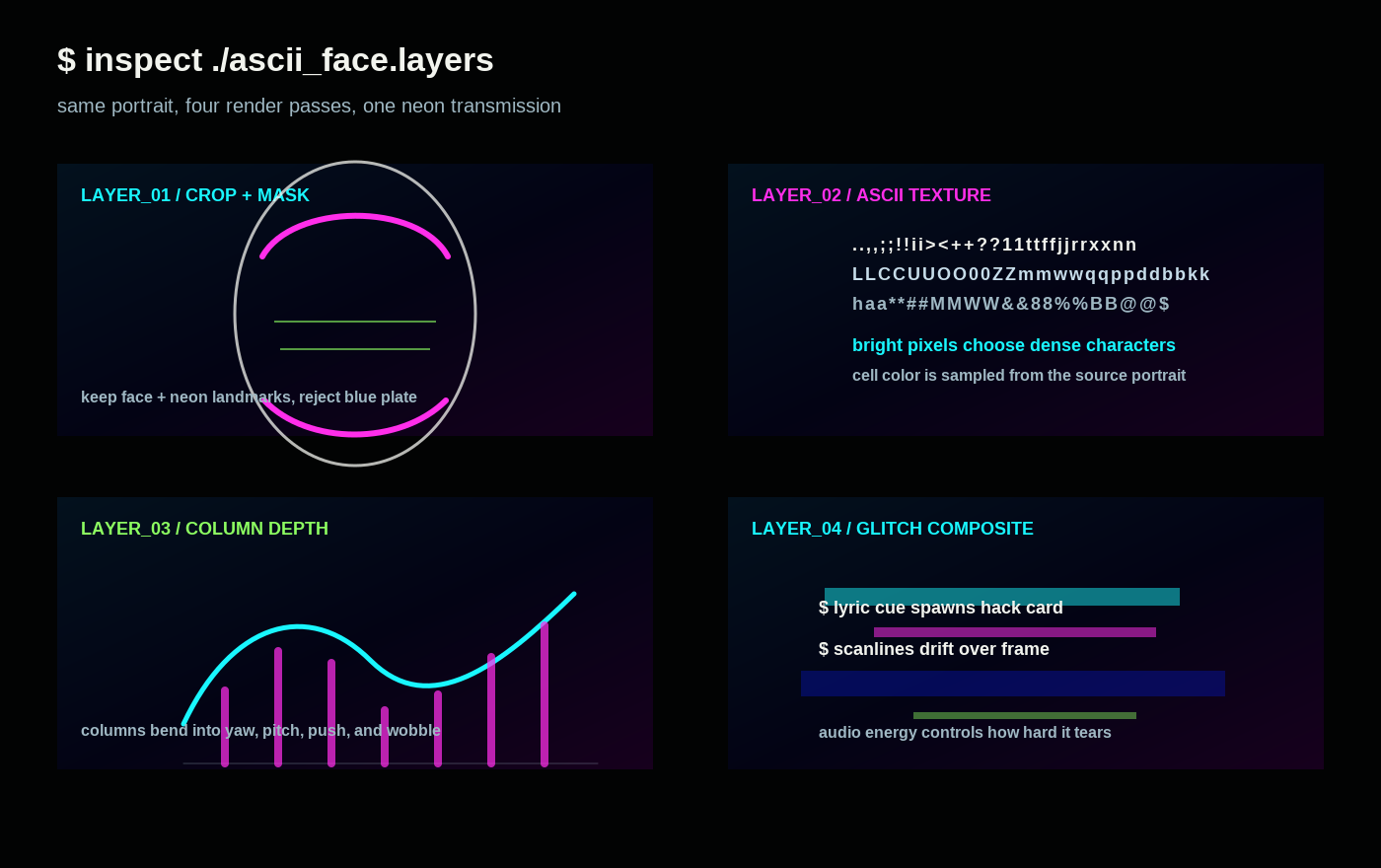
The portrait is cropped into a face-focused signal, sampled into a character grid, rebuilt as a colored ASCII texture, then pushed through a fake depth model. Audio bands drive the face yaw, pitch, push, trails, and glitch density so the head feels like it is reacting to the track instead of just looping.
```
reference portrait
-> crop + head mask
-> luminance cells
-> dense/sparse ASCII characters
-> sampled color texture
-> column depth parallax
-> audio-reactive push / yaw / trails
-> lyric glitch overlays
```
Why It Matters
This is the kind of AI art project I want to keep expanding: generated music, generated identity, code, timing, motion design, and web-native performance all meeting inside one object. The Fugi lyric video is a small part of F1R, but it proves the pipeline can make a song feel like a character, an interface, and a world.
F1R Character Explorations
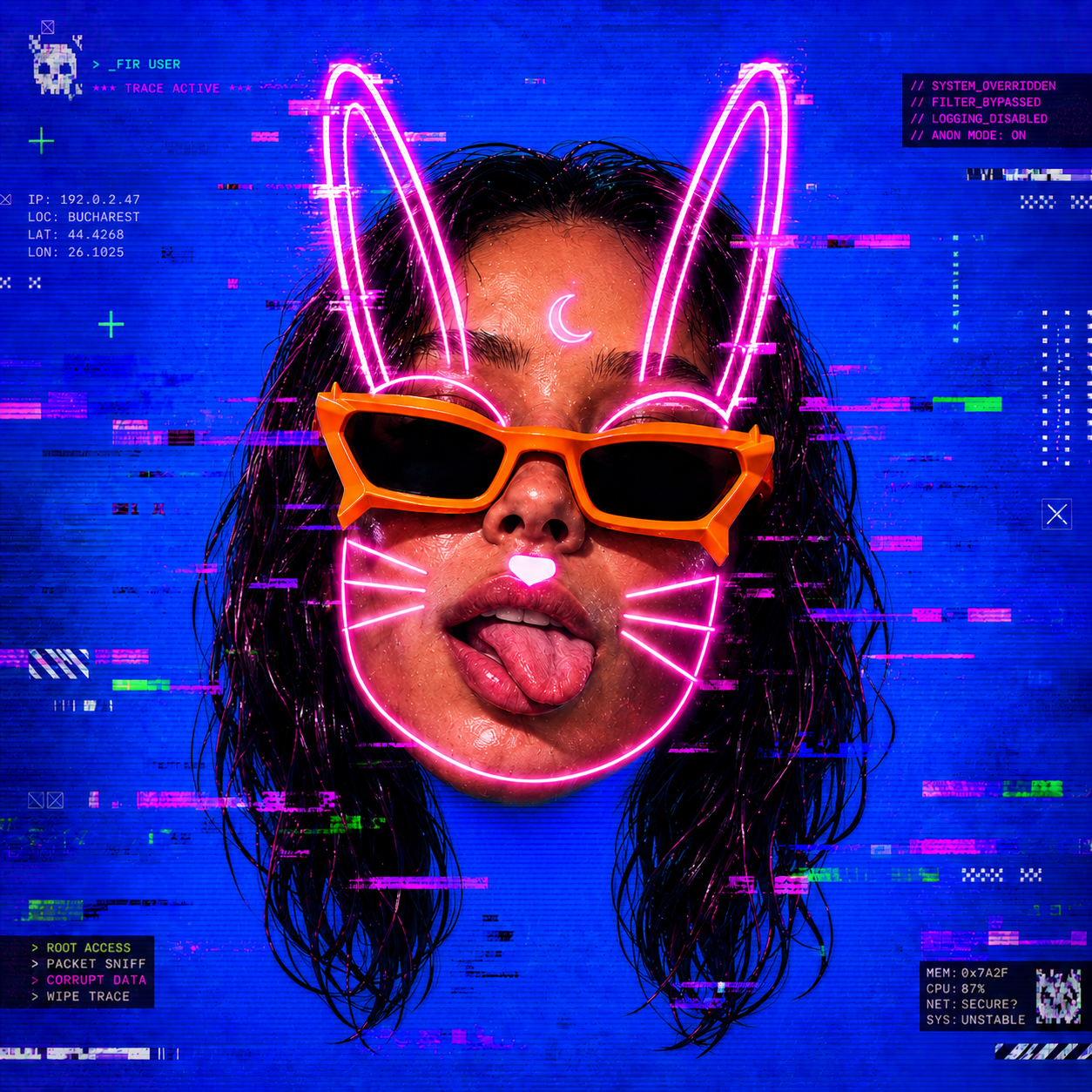
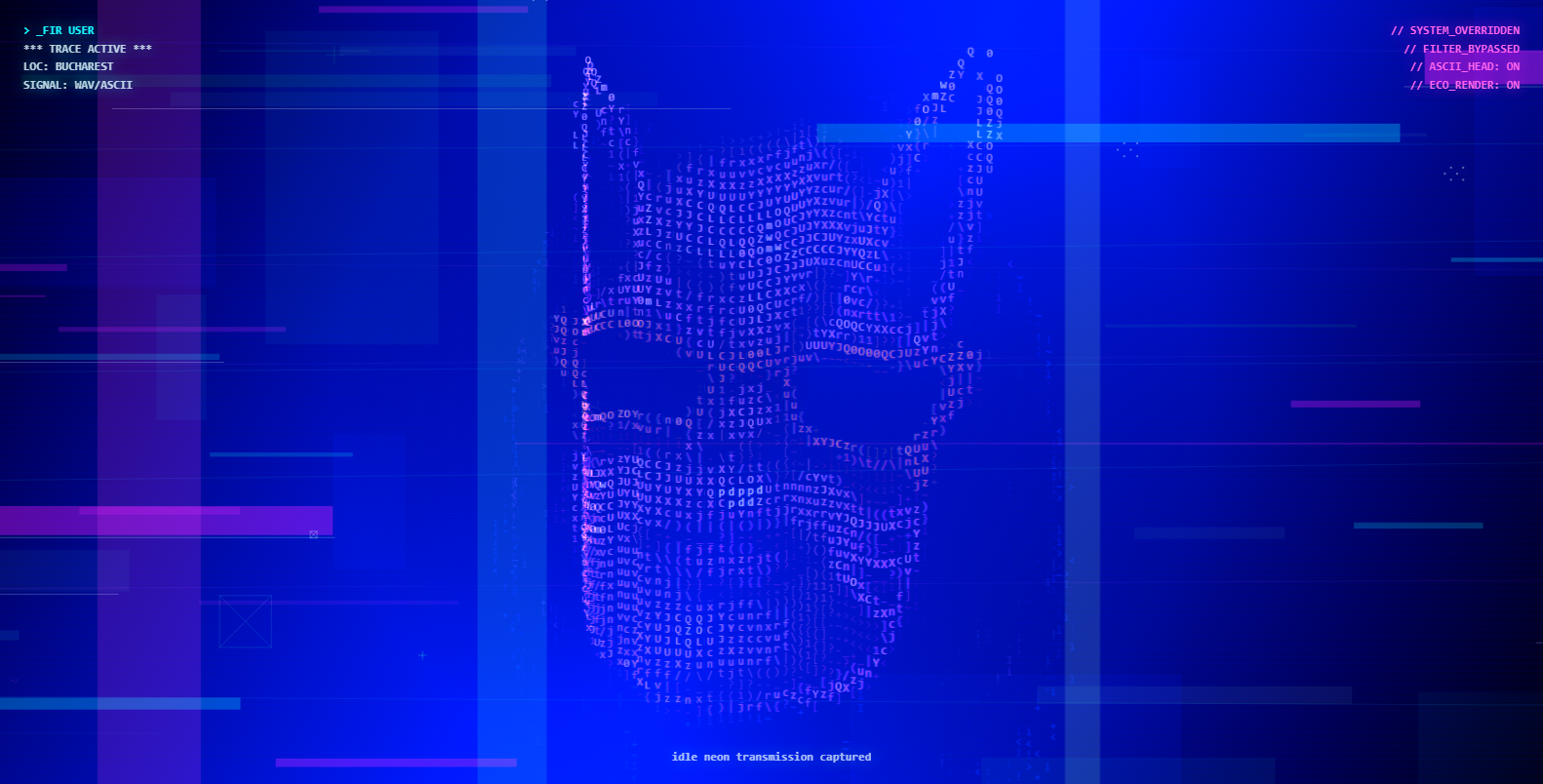
This glitch portrait sits closest to the final visualizer language: neon rabbit mask, blue hacked interface, anonymous user readouts, and a noisy signal texture around the face.
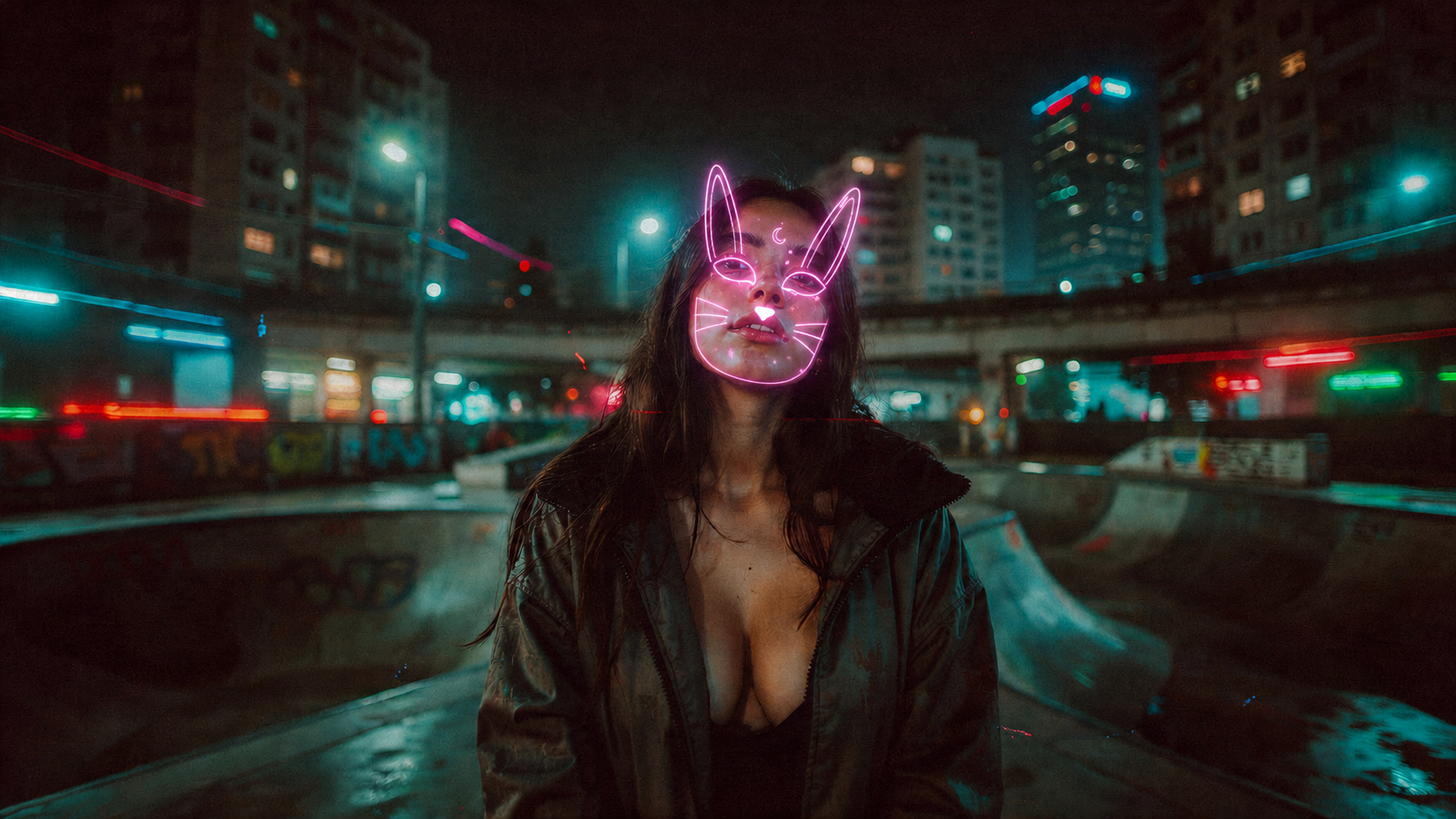
The wider cinematic look explores how the F1R character could exist in a real city environment: wet pavement, Bucharest-night energy, long-exposure light trails, and the rabbit mask treated as a diegetic neon device.
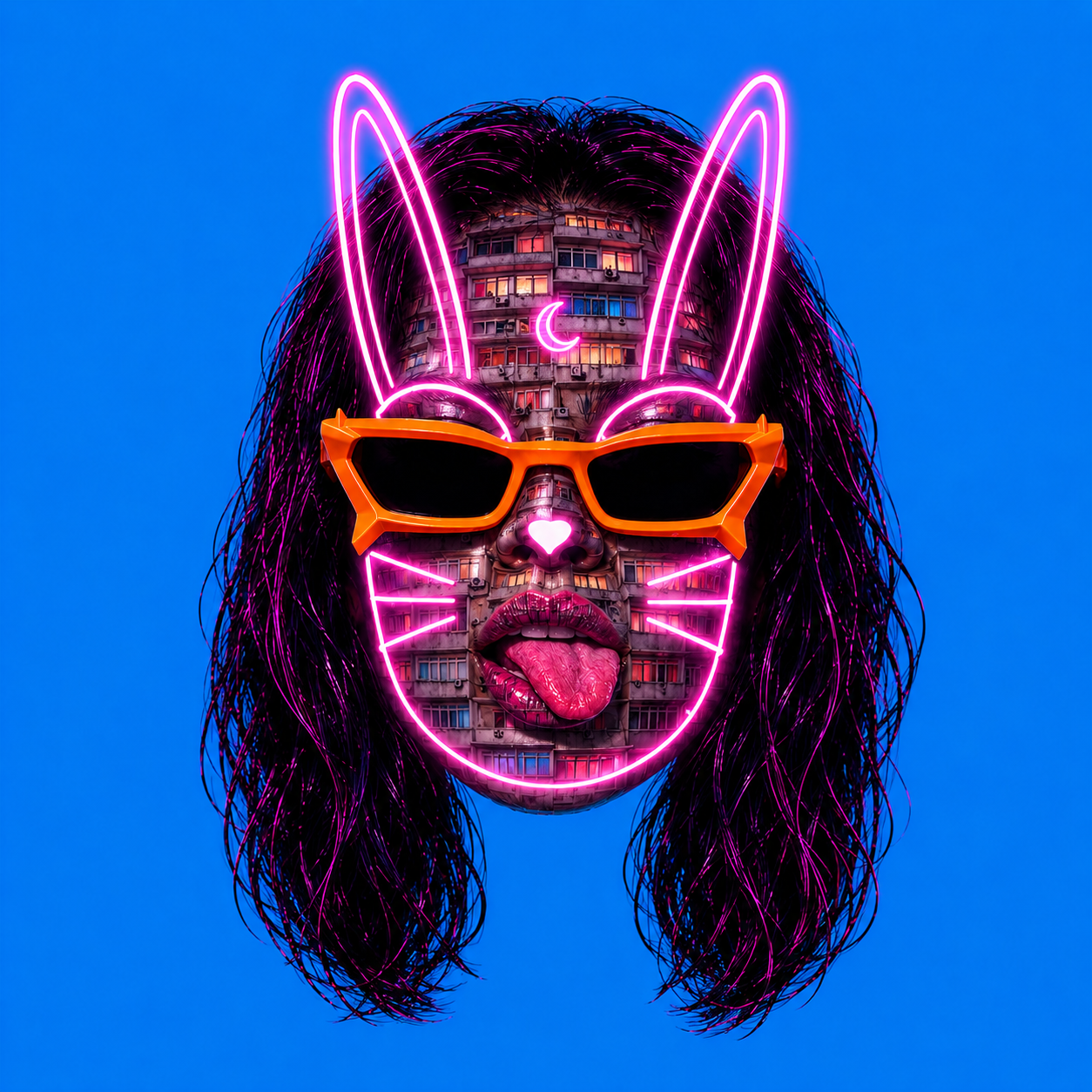
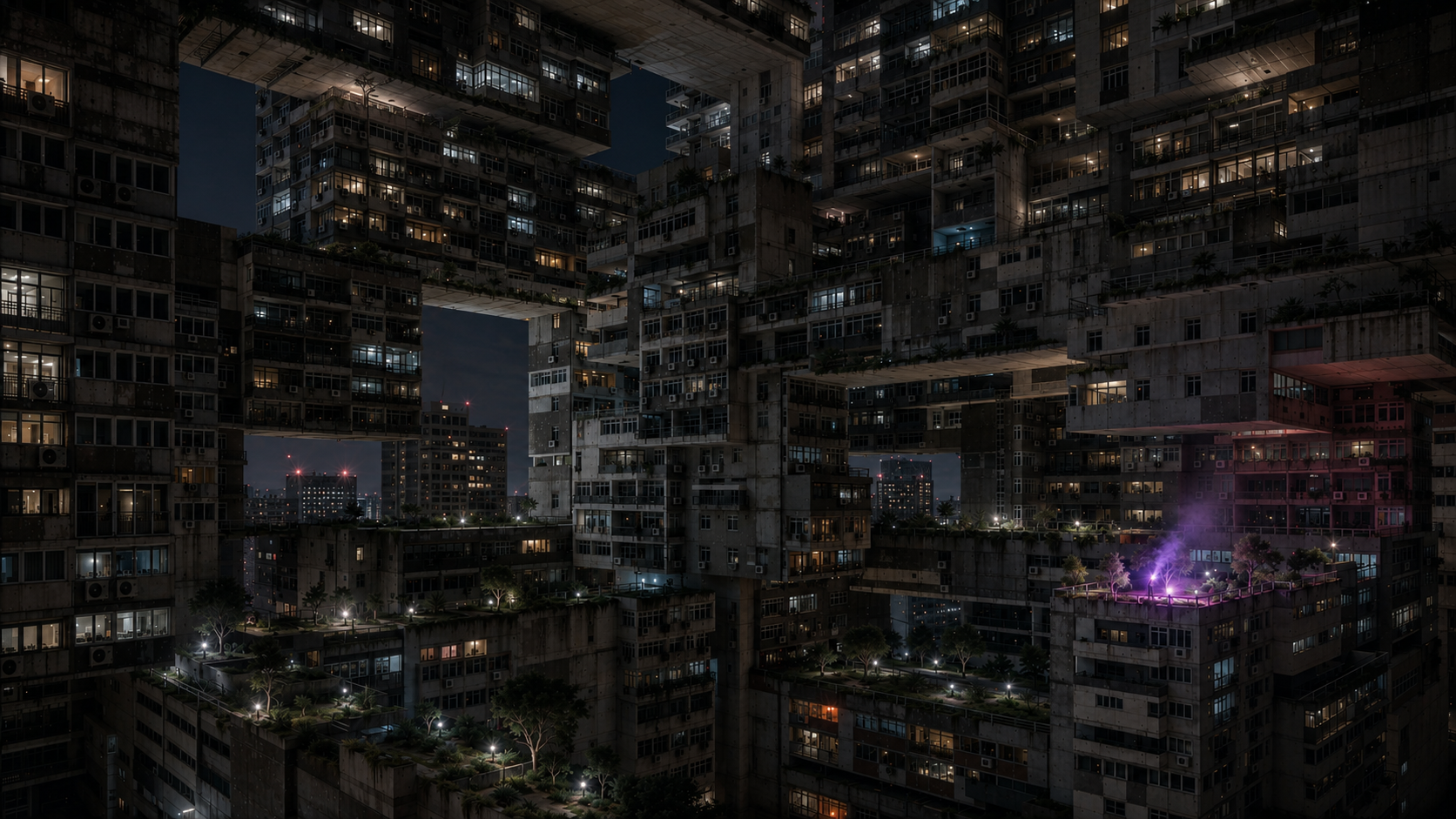
This version pushes the identity into a stranger direction, turning the face into architecture. It is not just a portrait variation; it suggests that F1R could be a person, a place, a broadcast, or an infected city surface.
Extended Video Tests
After the browser visualizer was working, I started testing how the F1R language could move outside the ASCII interface. One direction was Seedance 2.0: I was experimenting with ways to generate shots that feel longer than the usual short AI-video fragment, trying to keep the motion connected enough that it can read as a bigger sequence instead of a disconnected clip.
Video: Seedance 2.0 long-form motion test
I also tested LTX locally, looking for the best quality I could get from a local video-generation setup. The differences can be subtle; after a point, the choice becomes less about one tool being magically better and more about budget, render time, hardware, control, and how much cleanup a shot can survive.
Video: LTX local video quality test
High Resolution Illustration Studies
These stills explore the F1R world as higher-resolution illustrations rather than realtime browser graphics. The process mixed ChatGPT image work with local image models for cleanup and upscaling, then Photoshop color adjustments to pull the final frames closer to the same neon, wet, hacked-signal mood.