Vlad Maftei — VFX / 3D / AI
Dark Forest
2026 — ANIMATED BLENDER SHOT / GENERATED ASSETS + MOTION / LOOK DEVELOPMENT
An art-directable animated Blender shot built entirely through conversation with Codex: generated character, props, forest and motion, painted shading and layered lantern light, plus an illustrated 2D look pass.
Tools: Codex (Astra), ImageGen, Hunyuan3D 3.1, Kimodo, Blender, Geometry Nodes, Brushstroke Tools, MiniMax H3, DepthCrafter, ComfyUI
Video: Dark Forest, final shot (28 seconds, with sound)
Human + Codex + Astra
Dark Forest is a fully art-directable, animated Blender shot: a small traveller carries a lantern down a forest path while something in the dark watches him. I built it without touching Blender myself. My only interface was a conversation with Codex, running OpenAI's Astra model, which generated the assets, rigged and animated the character, assembled the forest and rendered every iteration while I directed the look, the performance and the light.
The result is not a flat AI video. It is an editable 3D scene: every asset, the rig, the camera and the lights can still be changed and re-rendered.
Video: The process in 45 seconds: assets, rig, motion, assembly, light
Visual Direction
The target was a painted anime look: expressive brushwork, simplified shapes, cool forest shadows and warm lantern light. ImageGen concept frames fixed the mood, palette and composition before any geometry existed, and the same frame became the reference for the final shot's first frame.
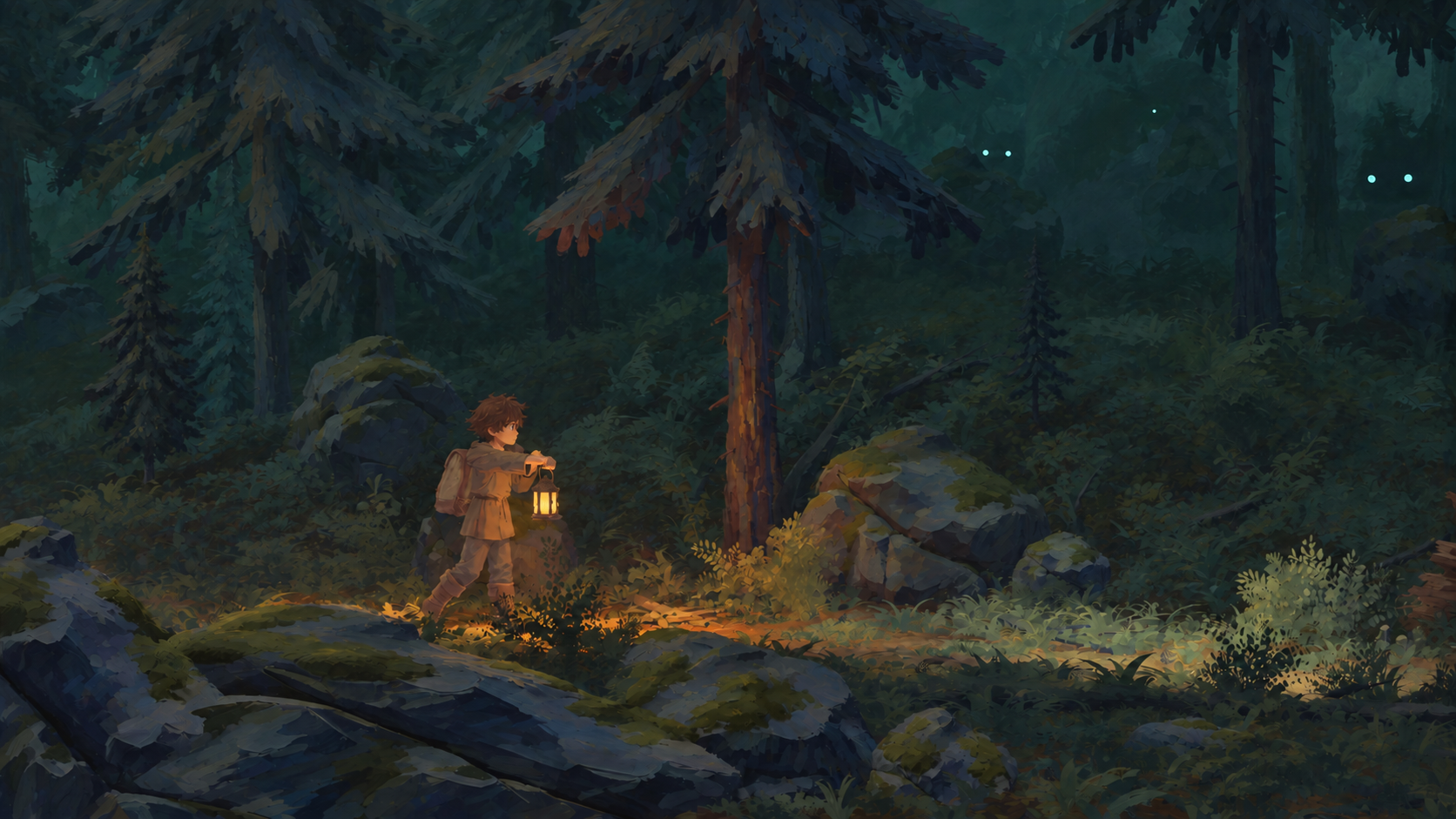
A Generated Character
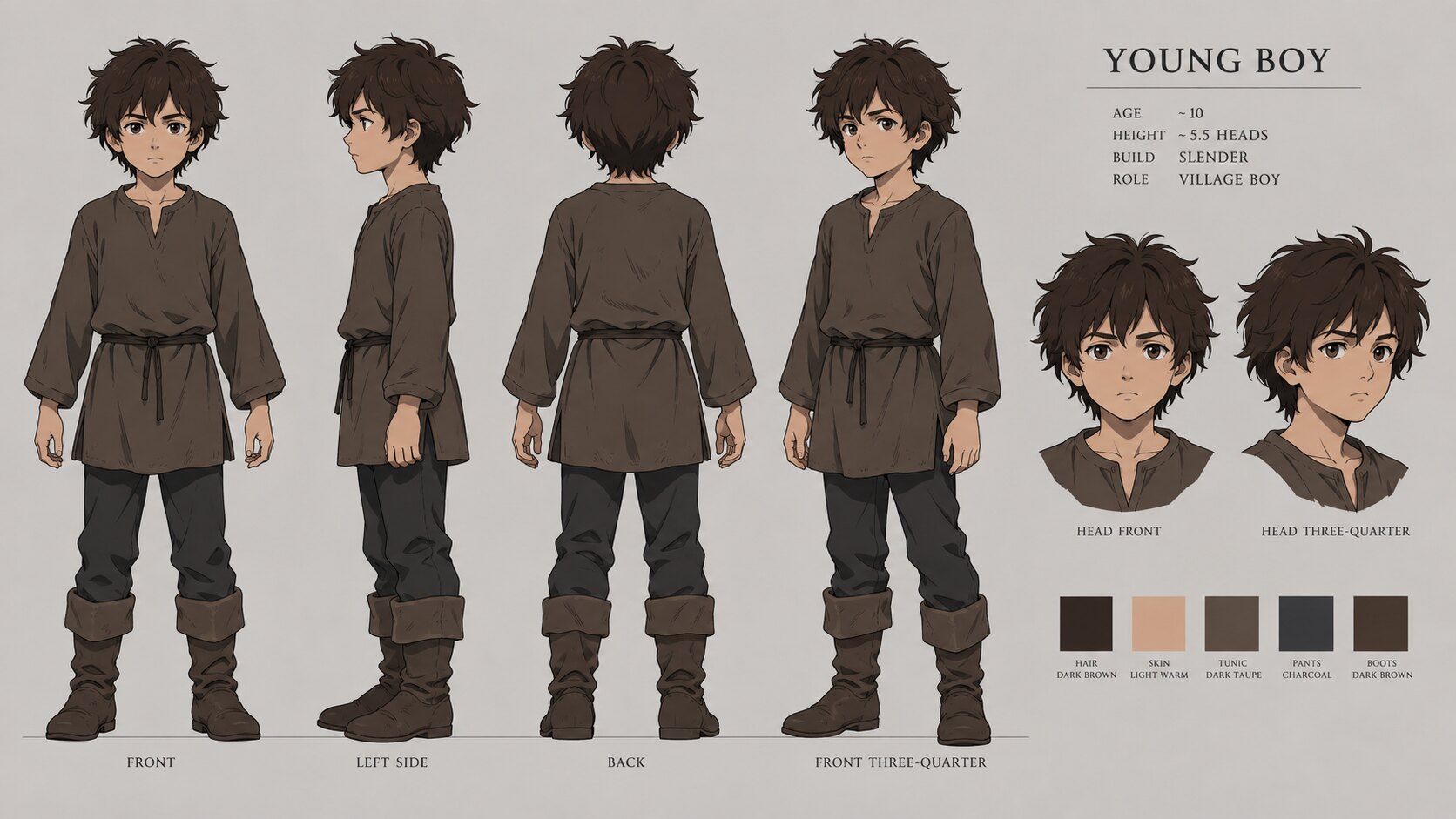
The traveller started as a character sheet: front, side, back and three-quarter views with fixed proportions. Four matching views went into Hunyuan3D 3.1, which produced a textured mesh. In Blender he gained real-world scale, a fitted skeleton, skinning and pose corrections for the shoulders, arms and hands that carry the lantern.
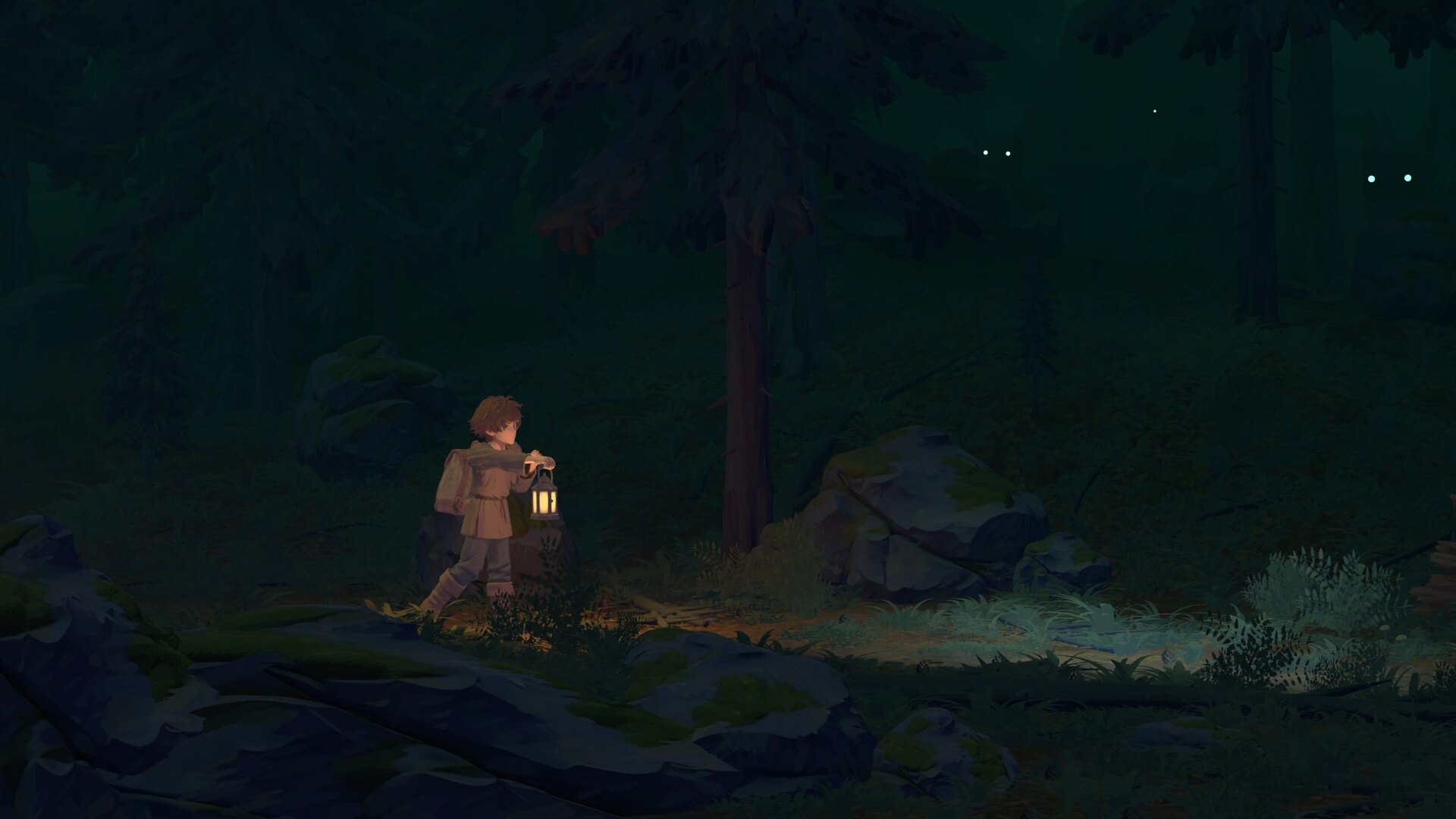
The backpack and lantern were generated the same way and fitted to him: the straps follow the rig, the lantern's glow and painted surface move with his hand, and the final finger grip was authored in Blender. Every asset in the shot can be turned around below. These are the actual painted scene assets, not concept images.
Directed Motion
The performance is generated too, with Kimodo, a 3D generative animation model, on the fitted rig. I directed the beats: walk, slow down, turn all the way back, hold, continue. Timing, glances and the lantern carry were adjusted take by take.
Video: Generated 3D walk: character view above, full travel distance below
The walk was the hardest part to get right. Early takes were robotic; later ones swayed too much; manually damping the hips broke the gait. What finally worked was fewer constraints rather than more: a handful of root waypoints and no forced footfalls, so the model could find a natural, slightly anxious walk on its own.
Building The Forest
The forest around the path is assembled from generated conifers, boulders, ferns, a gnarled stump and a broken hollow trunk, all Hunyuan3D meshes built from ImageGen views. Editable terrain gives the path a real slope, and more than 21,000 scattered instances across nine Geometry Nodes layers fill the undergrowth. Six small forest spirits, procedural Blender geometry with glowing eyes, independent blinks and head turns, watch from behind the boulder banks.
Video: Inside the actual Blender scene: moving through the set and repositioning the boy
Painted Surfaces And Light
The textured meshes gained stylised shading and surface-following brushstrokes made with Blender Studio's Brushstroke Tools. Lighting was built in layers: forest fill, then moonlight, then the lantern. Drag through the same first-frame camera from wireframe and white clay to the finished painted, lantern-lit frame.
Getting there took 60 look versions. The moonlight was approved as "perfect" at one version while the lantern still read as flat; later passes gave the lantern a real falloff gradient, cut the moonlight by 30% and darkened the forest until the lantern became the only warm thing in the frame.
The Final Shot
The finished shot runs 28 seconds in Eevee: a smooth 24 fps camera with subtle handheld drift, while the character and the rest of the scene animate on twos, at 12 held poses per second, for a hand-animated cadence. Wind moves through branches and plants with delayed responses, and the spirits blink out of sync in the background.
An Illustrated Look
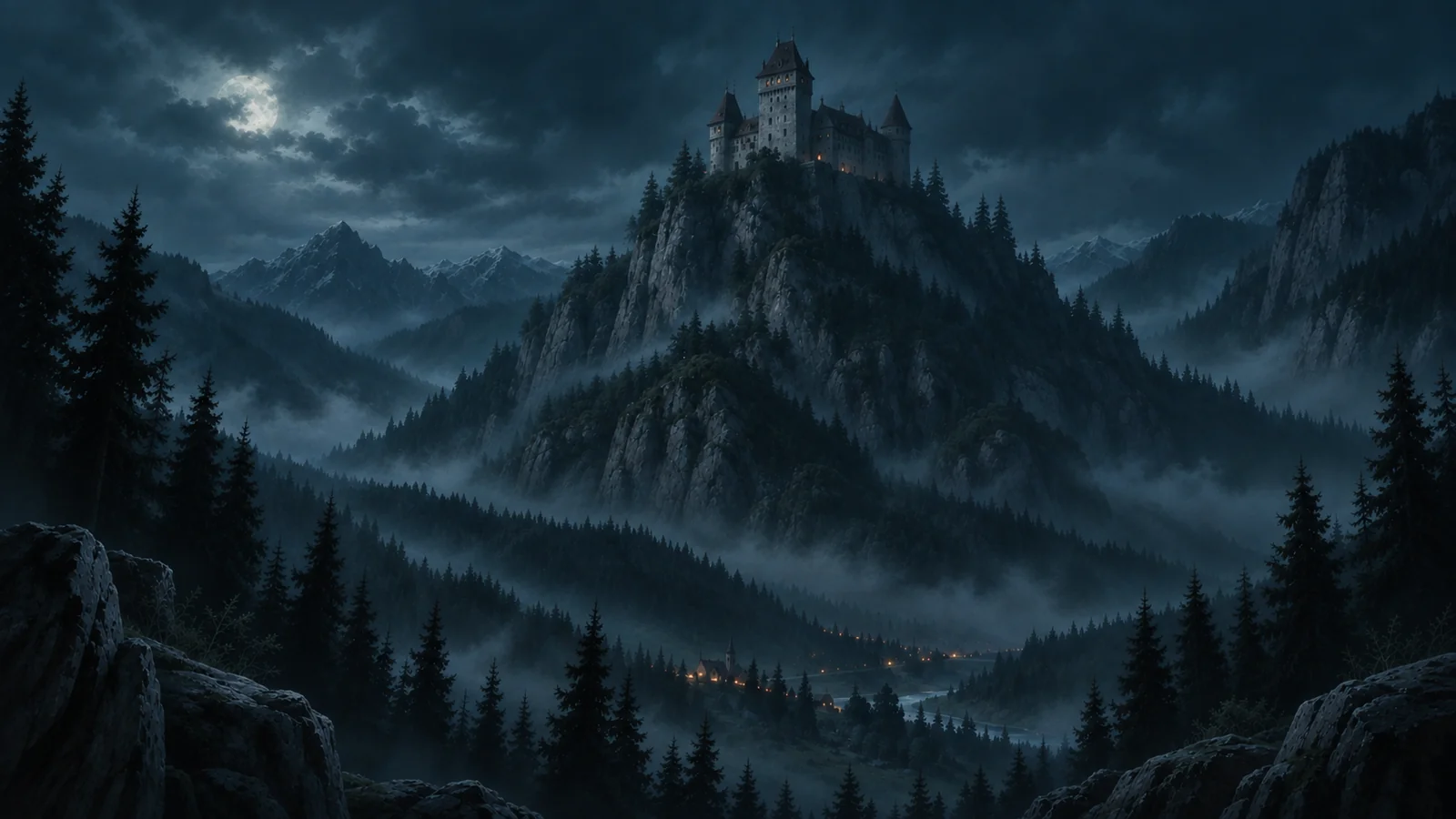
The same world also went through a second, flatter look development pass. Concept work defined the valley with a castle on the far ridge, the ascent path and the watchful forest, then tested colour-manga and ink-and-gouache treatments.
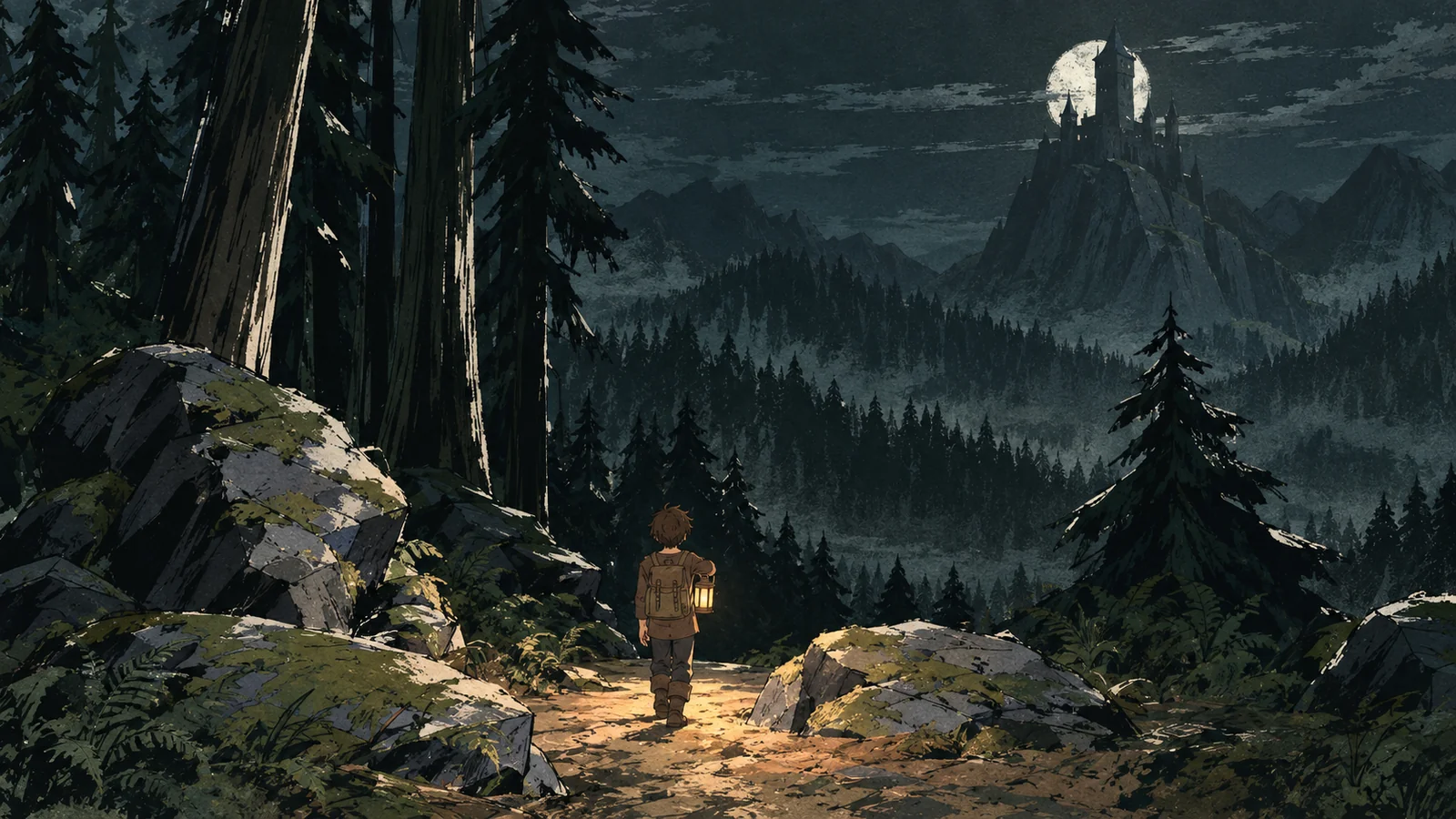
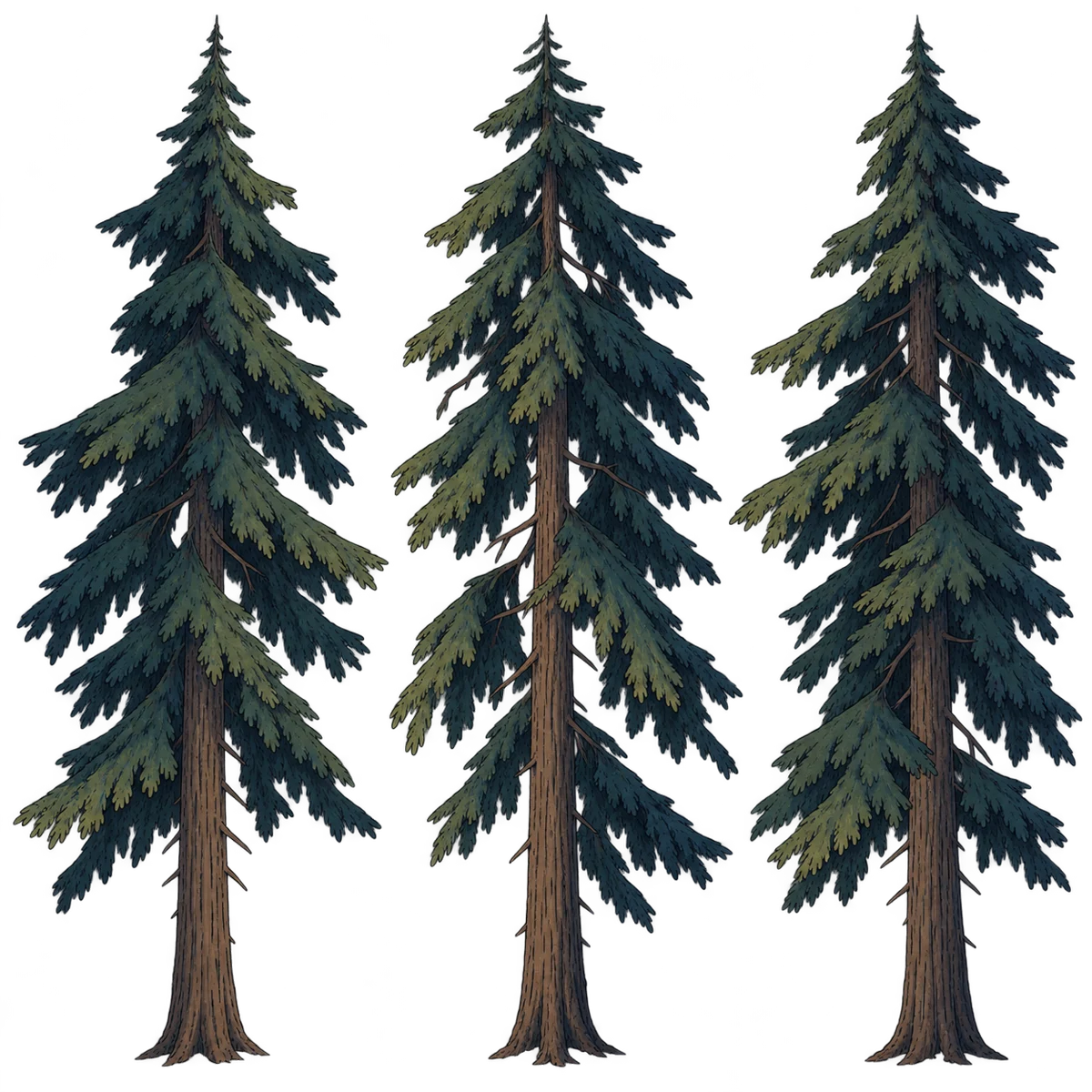
For this direction the forest elements were redrawn as painted, cardboard-like cutouts and placed at different depths around real terrain and the animated boy. It reads as 2D, but the camera still has real space to move. The optimised scene saves at 92 MB, and sampled 480p Eevee frames rendered in under a second each on my workstation, light enough to iterate quickly.
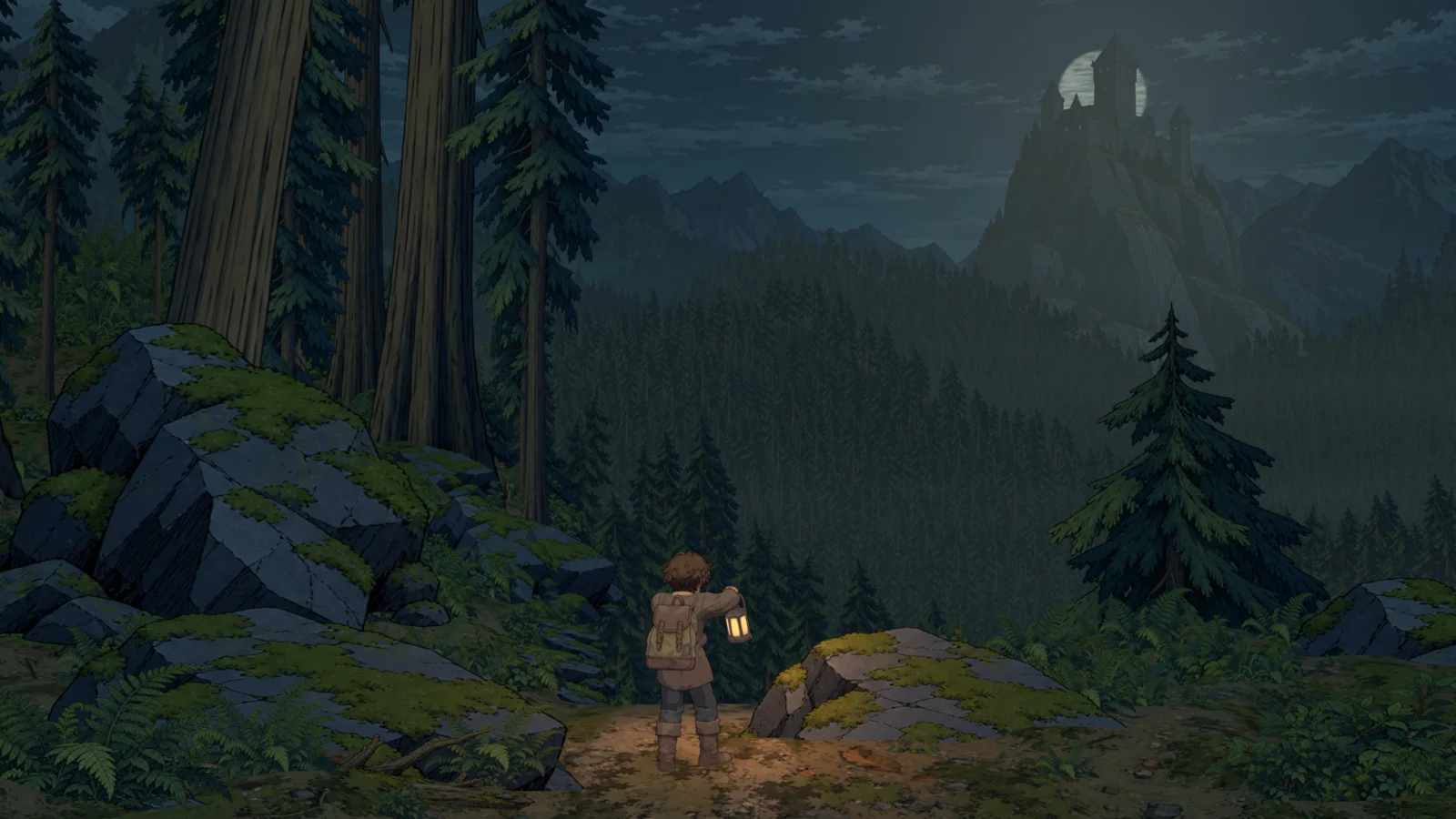
Video: Two-shot Blender edit with the illustrated forest, with sound
Pushing The Ink With AI Video
Finally I used AI video to push the drawn look further. An approved ImageGen ink drawing of the opening served as the guide frame, the boy as the only image reference, and DepthCrafter depth from the Blender shot as the motion control, generated with MiniMax H3 in ComfyUI and refined in a second pass. When the second shot's contours came out soft, the fix went into the source drawing rather than sharpening the video.
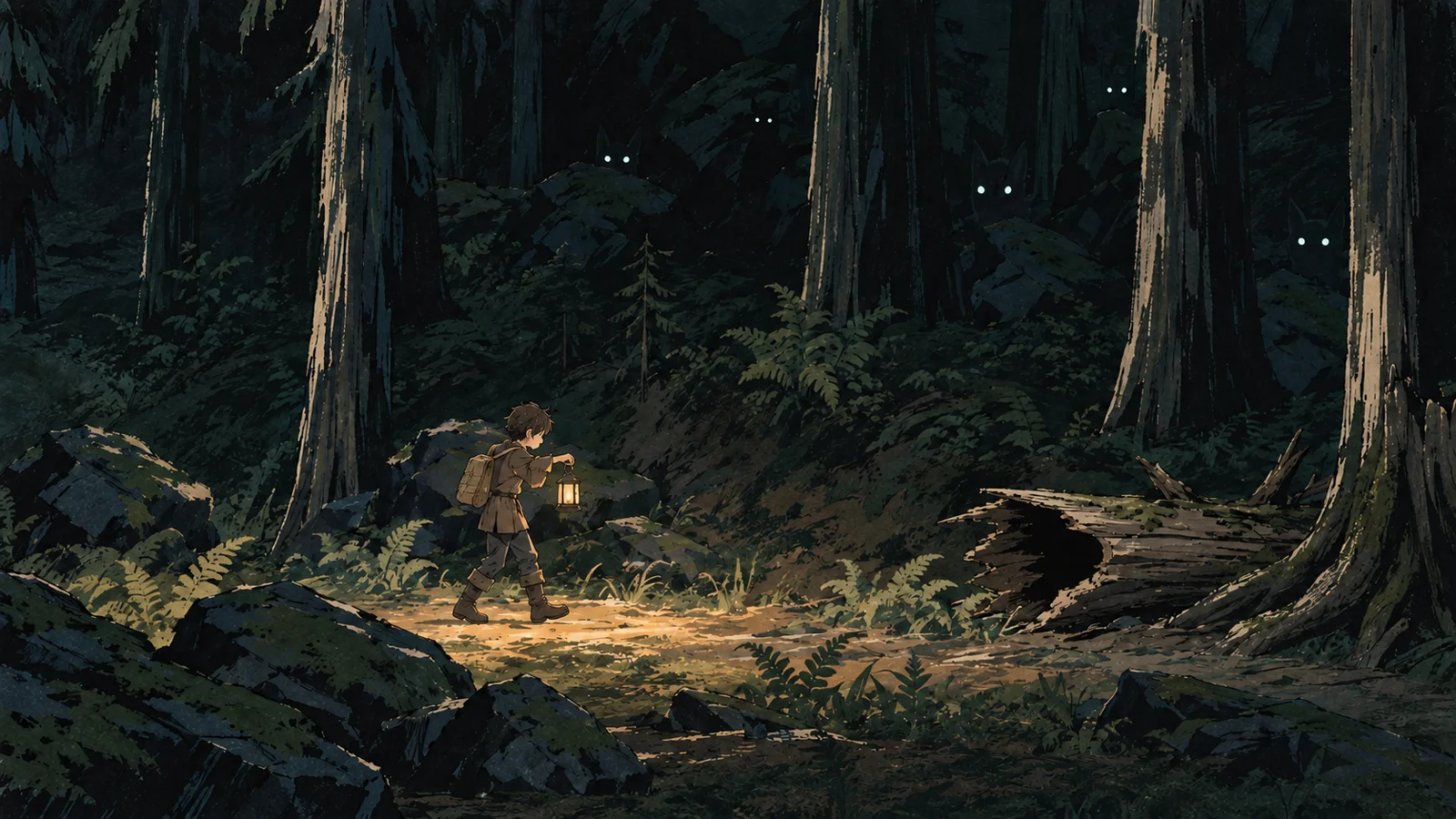
Video: Two-shot ink edit, generated from the Blender shots
What I Learned
Directing through conversation works when everything stays editable. Generated meshes, generated motion and generated light are only useful if you can still grab one and change it, and a Blender scene keeps that possible. The craft moved from operating tools to judging takes: knowing which walk felt afraid, which light was too flat, and when a version was finally right.
The full interactive making-of, with scroll-driven breakdowns and every turntable, lives at darkforest3d.pages.dev.